
In this blog, Tracey Hebron (Collections Clerk) explores the life and legacy of John Roddam Spencer Stanhope, the Yorkshire-born artist whose work bridged the worlds of Pre-Raphaelite painting, religious art and Victorian imagination.
Roddam Spencer Stanhope (1829-1908) was a Yorkshire painter often described as one of the last of the Pre Raphaelites. Born in January 1829 at Cannon Hall in Cawthorne, the home of many generations of the Spencer Stanhopes family, Roddam was the second son of six, of John Spencer Stanhope, and Elizabeth Wilhemina Coke.


A colourful character from a young age, his childhood surroundings at Cawthorne helped the development of a secure and strong personality. Archive material records a humorous story from his childhood. With a young Stanhope suffering with toothache his father gave him a guinea to get the offending tooth removed, the sympathetic father afterwards asked how the operation had gone. Young Stanhope replied ‘Oh that was alright, It seemed a pity to waste good money on a snuffy dentist so I just tied a string around the tooth, tiedthe string to a gate, slammed the gate and the tooth came out. I then spent the guinea!’ It may have been expected of him to follow a number of different paths in life due to his family ties however his passion for art took hold from a young age and not inheriting the family estates left Stanhope free to make commitment to art, despite his mother’s apprehensions. Elizabeth once wrote, ‘He is full of his art, I am afraid it’s a sad waste but he is at least happy’. Little did she know her son would follow his interests and go far in the art world.

He studied at Rigby before attending Oxford university. He understood the importance of his education once writing to his father, ‘Weither I am destined to be an artist or not cannot be determined, till I have perfected my education in painting and drawing’. He carved out his skills often working in oils, watercolors and mixed media. His subject matter was often mythological and biblical stories. After university he began moving in artistic circles and became friends with other artists including, Rossetti, Burne Jones and Holman Hunt, the gentlemen also known as the Pre Raphaelite brotherhood. This group became a huge influence. He now had a set of friends with whom he could exchange ideas and together they could broaden each other’s art practice.
Roddam went on to work with the celebrated brotherhood even recording their thoughts on his work. ‘I submitted my picture for their inspection and I must confess that their remarks on it were very flattering’. Stanhope’s career within the art world was cemented. In his personal life in January 1859 he married Elizabeth King, the daughter of John James King, and the widow of George Frederick Dawson. They settled in Hillhouse, Cawthorne, and had one daughter, Mary, in 1860. Staying close to his family he became art teacher to his niece Evelyn De Morgan. Around this time his health became a problem and Stanhope suffered with chronic asthma, leading the artist to find a home in Florence where he stayed during winter months.

Sadly the couple suffered great heartache in 1867, when at the age of seven, Mary died of Scarlet Fever. She is buried in an English cemetery in Florence. Her father designed the headstone. Roddam continued to work to the end of his life. He passed away in August 1908 in his Italian villa on the hills of Bellosguardo, near Florence aged 80. An exhibition of his work was displayed in London in the months following his death in celebration of his life.
The Marlborough Connection

In the 1870s and 1880s, Stanhope was commissioned to create a cycle of paintings for the Chapel of Marlborough College in Wiltshire. These large-scale works reflected his distinctive Pre-Raphaelite style and deep interest in religious subjects. Some of his best-known chapel paintings include The Revelation of St John and other biblical scenes that remain part of the college’s artistic heritage today. These works are significant because they demonstrate how Stanhope moved beyond easel painting into monumental decorative art, similar to the work being undertaken by his contemporaries Edward Burne-Jones and William Morris.
The Florence Connection
After about 1880, Stanhope settled permanently in Florence, Italy, becoming part of the city’s expatriate artistic community. Florence’s Renaissance art and architecture had long inspired him, and he chose to spend the remainder of his life there. He died in Florence in 1908.
One of his most important Florentine projects was the decoration of the Anglican Church of Holy Trinity, Florence. He painted a series of frescoes there, bringing his Pre-Raphaelite vision into an Italian setting. Unfortunately, these works no longer survive, but photographs commissioned by Stanhope himself provide a record of what they looked like. Those photographs are preserved in a volume associated with Cawthorne and have become an important source for researchers studying his lost work.
Fairyland at Cannon Hall
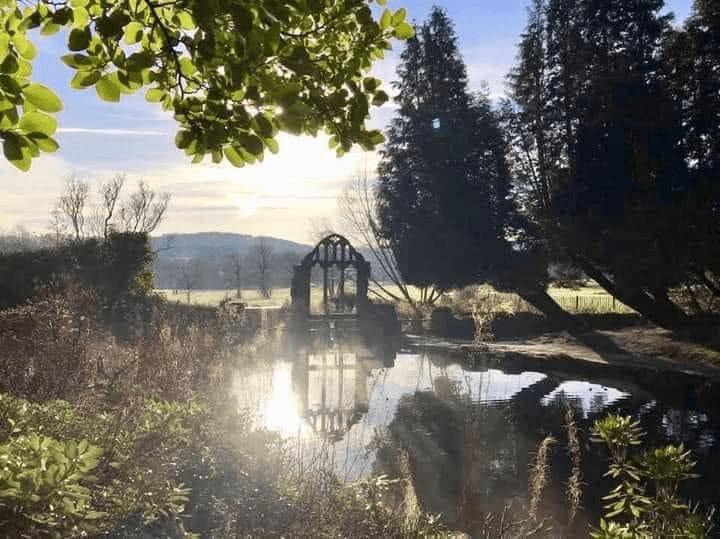
Created in the 1860s using architectural features from local churches, we think the daughters of the hall who built Fairyland with their father were influenced by their uncle, John Roddam Spencer Stanhope.


 Barnsley Museums Blogsite