
Currently on display at Cannon Hall Museum is a fascinating object that relates to the Napoleonic wars. It is a ‘passport’ that was signed in 1813 by Emperor Napoleon Bonaparte to release John Spencer Stanhope of Cannon Hall who was being held as prisoner of war in Paris. John Spencer Stanhope was a classicist and was supposedly making his way to Greece to study ancient ruins. The French army suspected he was a British spy and detained him for many years. Curator, Melissa Gallimore and Programme Development Manager, Ben Marsh find out more about this fascinating figure from Cannon Hall’s history.

John Spencer Stanhope (1787-1873) was the second son of Walter and Mary Spencer Stanhope of Cannon Hall near Barnsley. He received the typical education of the son of a gentry family and attended Christ Church College, Oxford. He took a keen interest in the Classics and was fascinated by the architecture, language and society of ancient Greece and Rome. In the 18th century it was quite normal for wealthy young men to travel around Europe in what was known as the ‘Grand Tour’. This was seen as a way to enhance their education and they often bought art and antiquities to send home. There are a number of sculptures in the Entrance Hall at Cannon Hall Museum which it is likely that John collected.

However, by 1810 war was raging across Europe as Napoleon, Emperor of France sought to take control of neighbouring countries including Spain. This was a time when many young men travelled within the British Isles rather than Europe. On the 29th June 1810 John set off to Greece by ship. Leaving Portsmouth he travelled to Lisbon in Portugal intending to make his way via Majorca and Sicily to Greece. He boarded a ship which he believed was going to Palma but it actually went to Barcelona which was under French control. Here John was arrested but was allowed to rent rooms and employ language and fencing tutors. On the 21st September 1810 John was imprisoned after being accused of supporting Spanish rebels to attack Barcelona. His diaries describe many of the incidents of his life during this time. Apparently, he spent his time in prison singing patriotic British songs such as God Save the King and Rule Britannia. Despite developing a number of escape plans he never actually went through with any of these.
Later that year John was moved by the French and by January 1811 was in Verdun in north-eastern France. In the city he secured rooms to stay in and met many well-educated people. Whilst in Verdun John had the rare opportunity to see Napoleon passing through the town. His description of Napoleon is of particular interest;
‘His face looked swollen, his complexion sallow and livid; his eyes—but it is impossible to describe the expression of those eyes; I need only say that they were the true index of his character. There was in them a depth of reflection, a power of intention (if I may so call it) of seeing into the souls of men….’
John continued to appeal to the state for his release but was sent to Paris in October 1812. His appeals were supported by a number of people with an influence in society and on 20th March 1813 John was issued a passport to continue his journey to Greece. At the same time he also received paperwork saying that he needed to return to Verdun. With the two contradictory pieces of paperwork from different departments John decided to head for the Rhine and successfully reached Vienna away from the influence of the French.
John’s route back to Britain was affected by Napoleon’s army pushing north into Europe and he had to travel through Poland, Germany and Sweden. He only just evaded being captured in Dresden. John returned to his family at Cannon Hall in summer 1813. Despite his lengthy ordeal in October 1813 John set off again to make his way to Greece. His route across Europe entailed many diversions including a delivery of messages to the Queen of Wurttemburg. Charlotte was the daughter of King George III and married King Frederick of Wurttemburg. Despite initially supporting Napoleon Frederick changed his allegiance in 1813. It is possible that John delivered information that influenced this decision.
John’s trip to Greece resulted in a publication about his classical research, ‘Topography illustrative of the battle of Platæa’ printed in 1817. The question remains whether John was a British spy using his time in Europe to gather intelligence or just someone who was in the wrong place at the wrong time?

Exhibition – Cannon Hall: The Story of a House and Its Family
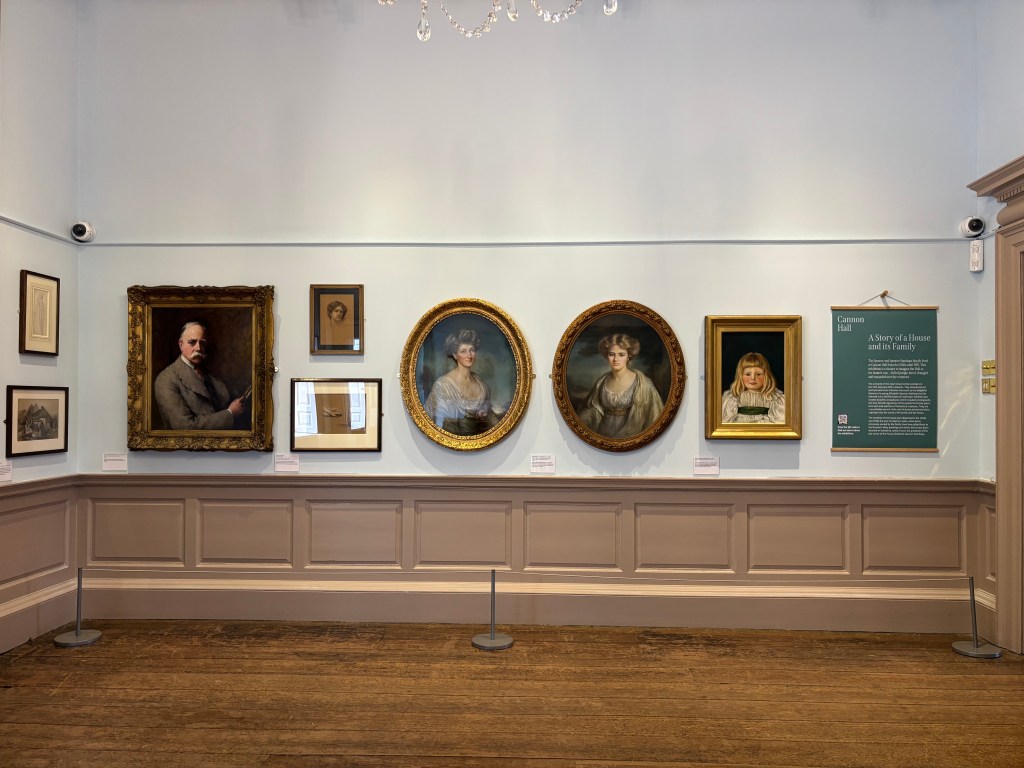
On display until 20 September you can learn about the people who called Cannon Hall home, from fiery personalities to fashionable society hosts, rumoured spies to Pre-Raphaelite artists. Each generation of the Spencer, and later Spencer Stanhope, families left their mark on the building. Follow the journey of how the rooms were used and changed by the family through the generations. Nearly 70 years after Cannon Hall opened its doors to the public, discover paintings and objects that give a glimpse into the family who called this place home.
Have you read our recent blogs?


 Barnsley Museums Blogsite