
Whilst researching the history around Elsecar, Catherine Roebuck (Visitor Services Assistant) came across a reference to a boat called the ‘North Star’ built in 1855. This was a surprise that boats were built so far from the coast, she then set about trying to find the Boat Yard.
Why was there a boat yard?
In the early 18th century, the nobility, gentry, and landowners of Elsecar had vast quantities of coal and ironstone under their land. The minerals in these areas have been mined for years in small quantities for local purposes. Transporting coal and ironstone was accomplished with horse and cart on mud tracks, but coal was greatly needed in other parts of the country and a solution had to be found.
By 1792 it was decided to build a canal, and the enterprise would be known as the Dearne and Dove Canal and an Act of Parliament was to be obtained to allow the scheme to begin. The Elsecar canal system would become a small part of a much wider network of navigable waterways that was developed across the country in the late 18th and early 19th century. Between 1760 and 1840 over 4100 miles of navigable waterways were constructed.
Construction started in the small village of Elsecar, around 1793. A reservoir to feed the canal was made by damming up the boundary stream, the Knoll Beck, which is a little further upstream than the site of the Elsecar Heritage Centre. The work was not easy and the workforce often difficult. But the Elsecar Branch to Cobcar Ing, with a reservoir was completed by 1796.


The branch ended at Cobcar Ing, which was a few hundred yards from the New Colliery being sunk by the Earl Fitzwilliam. The Earl had plans to bring the canal right up to the Ironworks and Colliery and an extension was completed by 1798. The whole branch was finally open on 12th November 1804.
Keels
The boats that used the Dearne and Dove canal were called Keels. They were boats with a type of single-masted, square-rigged sail, used for inland cargo transport around the Humber Estuary and canal systems. They descended from Saxon ships of the fifth century.
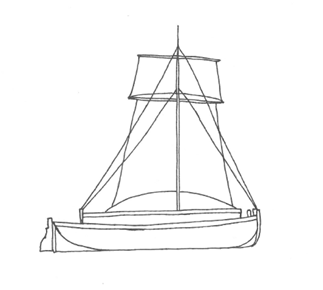
Keels size was dictated by which part of the inland waterway network that the keel was intended to work on, having the maximum size hull that could get through the locks on their intended routes. The Keels on this canal were about 57 feet long and 14 feet 8 inches wide. When fully loaded it floated very low in the water. They could carry about 100 tons of cargo, although in times of drought when the water levels were reduced, they had to carry half loads.
The Keels would need regular maintenance and on the long winding canals it became important to set up scores of inland boat yard to keep the keels in good repair. Trade on the canal increased and new boats were needed to handle the increasing trade. The Elsecar Branch of the Dearne and Dove Canal had its own Boat Yard to deal with passing trade repairs and later started to build keel from commissions.

The boat yard and its people
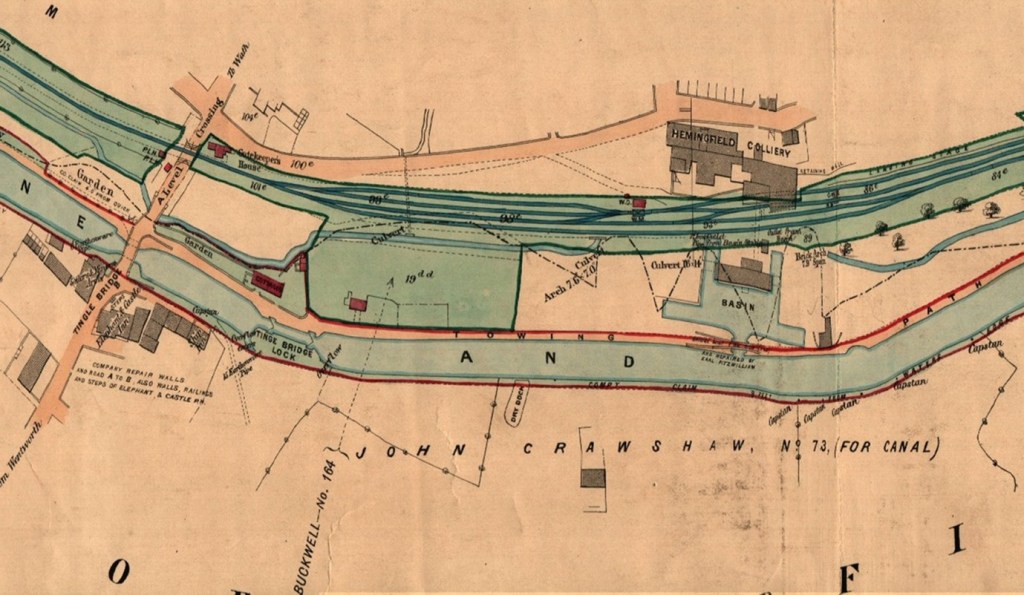
The Boat Yard with a dry dock, was situated part way between Elsecar and Hemingfield, close to an area known as Tingle Bridge. This area became a centre of boat building on the Elsecar branch of the Dearne and Dove canal and many of the inhabitants living nearby work for the boatyard. Tingle Bridge also had three pubs, two with names relating to the industry they served, The Ship Inn, The Sailors and Miners Arms and the other was called the Elephant & Castle Inn.
At least 4 boats were built in this area. The first being ‘North Star’, a keel built in 1855 which could carry 40 tons of cargo.
Robert Longley was a carpenter living in Kitroyd, Jump in the 1851 census. He came from Higham, near where the Barnsley Canal started. He would have grown up around the Keels coming into Barnby Basin and was listed as a Ship Carpenter in the 1841 census. The boat yard in Barnby was run by Joshua Turner and it is likely Robert served his apprenticeship there. He brought his skills to Elsecar and may have been involved in making ‘The North Star’ in 1855. But by 1861 Robert had sought better opportunities in Worsbrough, working as a boat builder in Wildsmith’s boat yard. By the 1871 census Robert and his brother Isaac Longley had taken over the boat yard. They developed the business to include a timber yard, sawmill and chemical works. Together the brothers built numerous keels which travelled along the Dearne & Dove canal for many years.
After Robert Longley left the Elsecar area, Joshua Turner’s son took over. Henry Turner was born in 1832 to a boat building family. He grew up watching his father working on canal boats on the Barnsley Canal. By the age of 19 he too had become a boat carpenter. In 1853 he married Hannah Hinchliff and by 1860 the family were in Hemingfield.

Henry was now living in one of two houses built next to the Boat Yard. George Wilson lived in the other house; he too was a boat carpenter and had also come from the boat yard of Henry’s father. George was more experienced, being about 25 years older, so probably helped Henry get the business started. Later Henry’s two sons Joshua and John joined him as they grew up and all three built and repaired boats.
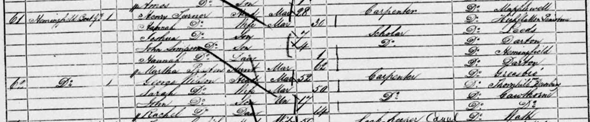
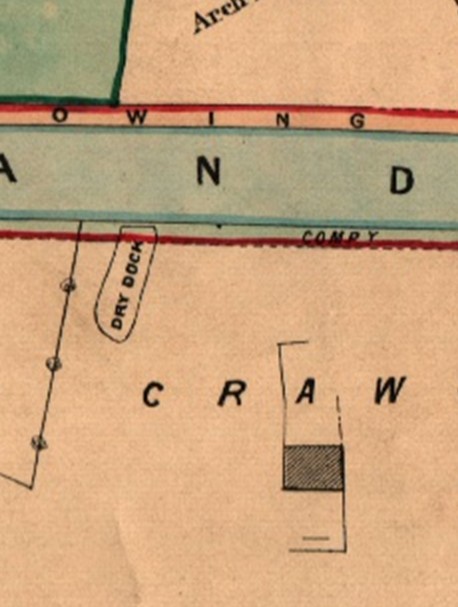
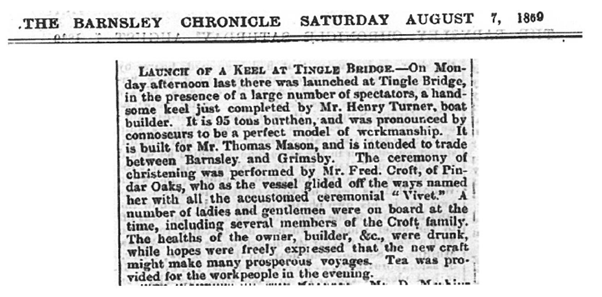
The boat yard had a dry dock on the north-west bank of the canal opposite Hemingfield Basin. The first boat they built was “The Joshua”, which was a keel launch in August 1861. It was built for Mr William Farrow and was to work the canal between Gainsborough and Hull. Henry’s son Joshua who was 7 years old, had the honour of baptising the keel, which could carry 100 tons of cargo. After the launch, a celebration was held in the hold of the new vessel, where thirty sat down to enjoy a meal served by Henry’s wife, Mrs Hannah Turner. Other boats built in the boat yard:
“The Lark” a keel of 90 tons burthen launched in May 1866.
“Vivet” a keel of 95 tons burthen launched in August 1869.
In 1873, Turner’s Boat Yard repaired a keel named “Alfred and George”, at a cost to the owner of £31, but the owner Mr Wells of Hull believed he was being charged an excessive price. He thought £15 was the value of the work done. Henry went to Barnsley County Court to get his money. The Judge said, “he could not say whether the charges were exorbitant or not” and asked a boat builder from Wakefield to assess the work carried out. This boat builder priced the work at £29, very close to what Henry Turner had asked for. The Judge’s verdict was that Henry should receive that amount.
Blacksmiths worked at the boat yard. Joseph Gower brought his family to Hemingfield around 1838. He was a Blacksmith and had been working in Wombwell. He moved with his wife Mary and 3 young children. He would have come for work, making farming and mining tools, metal parts for Wagons and horse harnesses, along with all manner of metal household items. When the boatyard opened Joseph soon gained work making all the metal parts for the boats. By 1861 Joseph had been joined in Blacksmithing by his son Archibald. His son Joseph had become a Joiner and son William, at 16 years old, was a Boat Building Apprentice. The whole family were reliant on work from the boatyard.
The Turner family continued to live and work in the boat yard until at least 1881, and then Henry and son Joshua moved to a boat yard at Parkgate. Henry died there in 1891, age 59 years.
The railways had started to take over from the canal in the transportation of goods around the country, the need to make new keels had diminished, which is possibly why the Turner family left Elsecar for a busier section of the canal system. Unlike the Longleys, the Turners didn’t diversify and were still solely boat builders and repairers.
By 1891 the boat yard seems to have gone, and the 2 boat yard houses were being lived in by families with jobs relating to the local collieries.
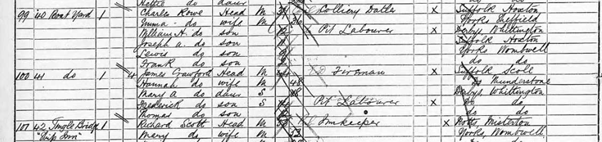
The boat yard houses continued to be used as houses through the 1901, 1911 and 1921 census, mainly by colliery related employees. When the 2 houses were demolished is unknown, but many houses in the area were affected by mining subsidence and taken down in the 1960’s and 70’s.
So far, I haven’t been able to find any photos of the boat yard and its 2 houses. If anyone has any more information or photos of the forgotten boat yard, please email: elsecarheritagecentre@barnsley.gov.uk for the attention of Cath.

 Barnsley Museums Blogsite