2025 is the centenery of Barnsley’s war memorial. For 100 years the people of Barnsley have come together to reflect and remember those who made the ultimate sacrifice. In this blog Michael Hardy (Digital Engagement Curator) looks back on the unveiling of the memorial on 11 October 1925
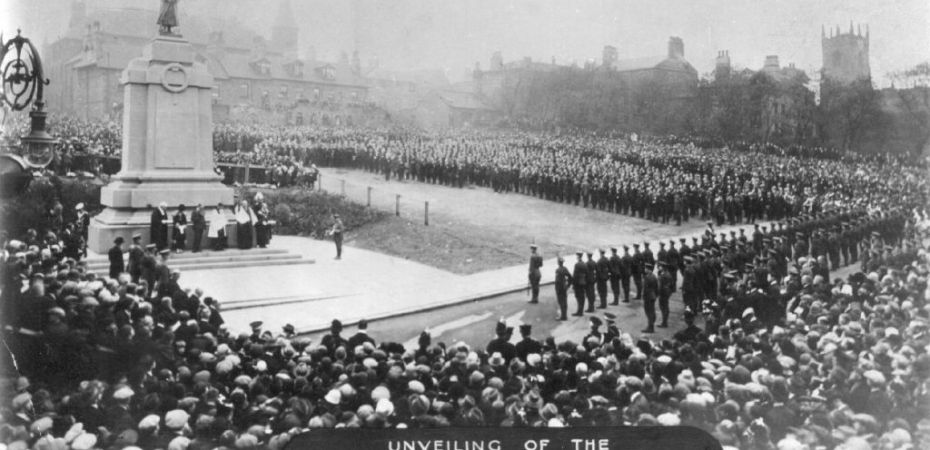
From the museum office in the town hall I can see the war memorial from my desk. I often wonder what it must have felt like on the day it was unveiled. There’s various photos of the event in Barnsley Archives and you can see quite clearly lots of children amongst the busy crowds. Were they there to remember their dad or brothers who never came back from war? Although it was seven years since WWI ended emotions must have been running high on that day.
I also wonder about how different the landscape of the town centre would have been so much different back in the 1920s in the days before the current town hall and the nearby Technical College.
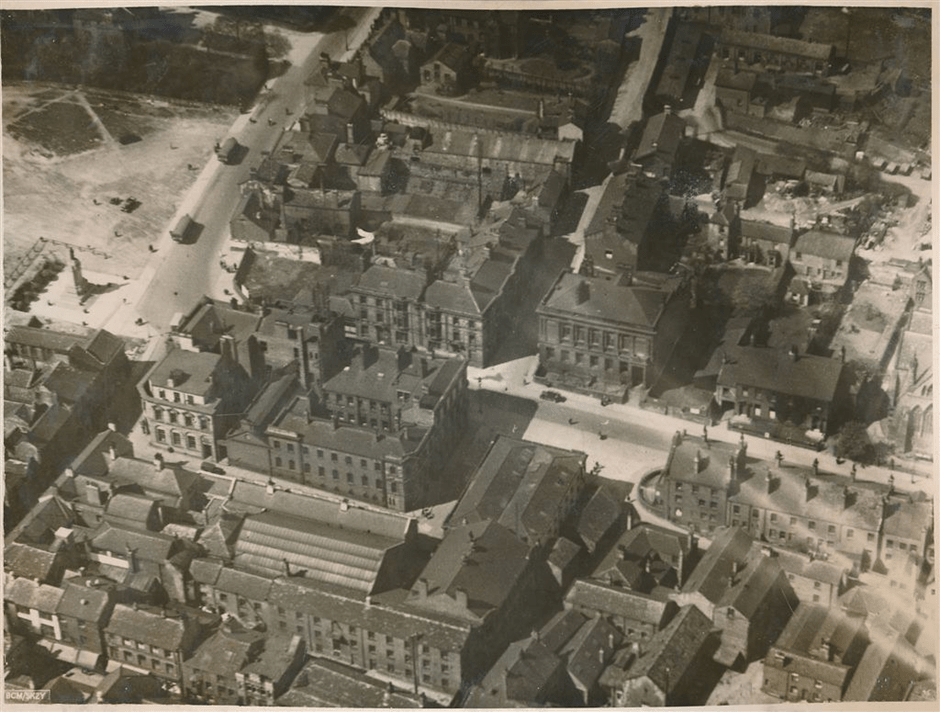
The town hall wasn’t built until the early 1930s as my previous blog marking 90 years of Barnsley town hall explains. There had been talk at the time that maybe the memorial should be moved up to Locke Park to make way for a new town hall, but obviously this idea didn’t come to fruition.
Barnsley Remembers
Even before the world war had ended there were already plans to build memorials in villages across Barnsley. A quick search of the British Newspaper Archive which is free to access in Barnsley Archives or any Barnsley library, brings up multiple articles in 1917 about the desire for different memorials around the borough. This article focuses on the town centre but at this point I feel the need to mention the Barnsley War Memorial project group, a small group of volunteers who spent 100s of hours compiling the first borough wide WWI roll of honour as well as researching and uncovering new memorials along the way.
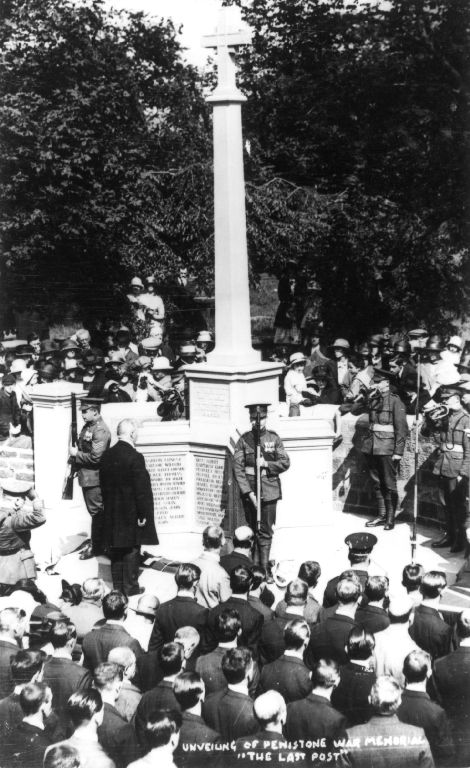
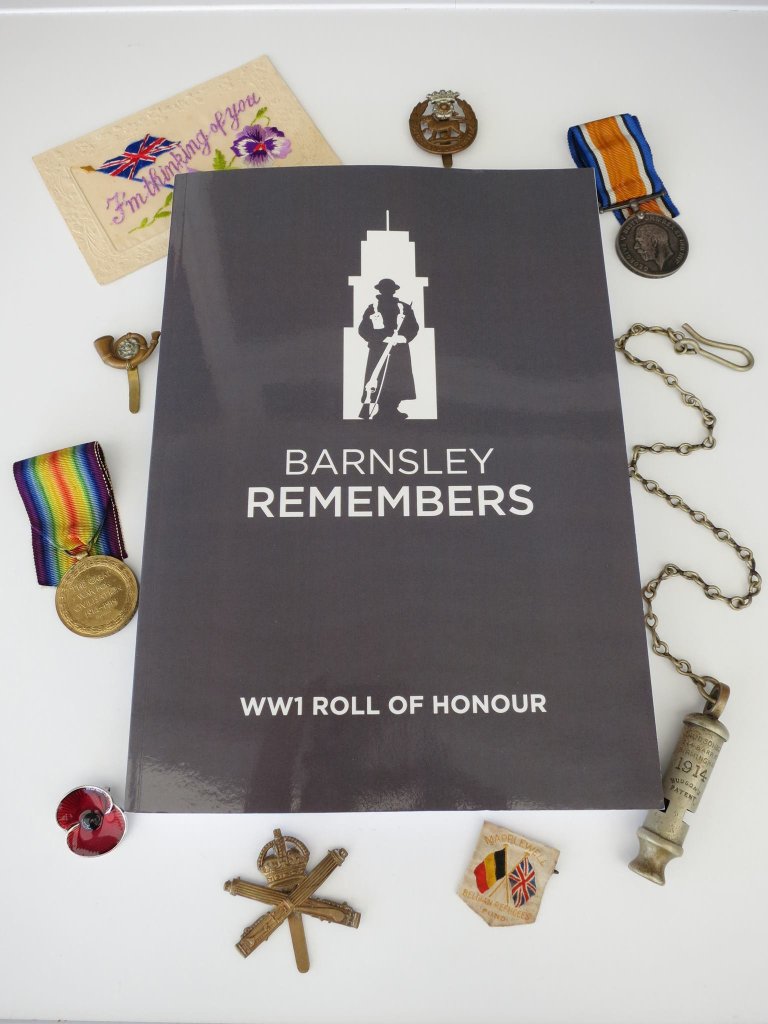
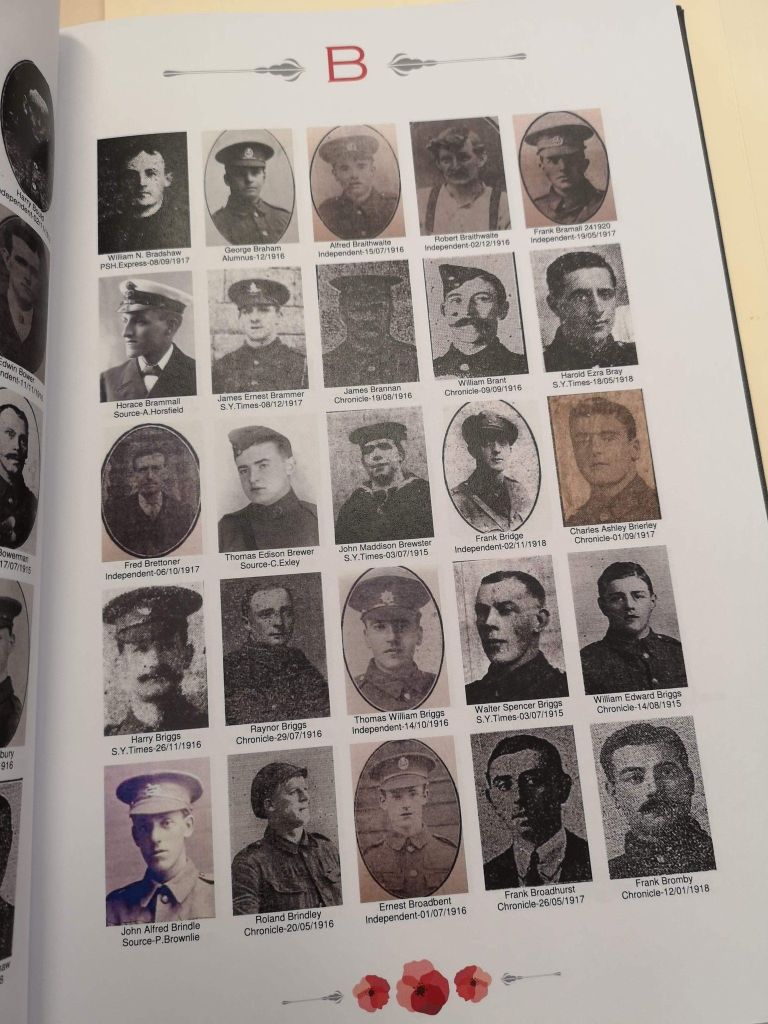
You can see the WWI Roll of Honour book when you next visit Barnsley Archives and Local Studies or view the online version.
Taking a closer look
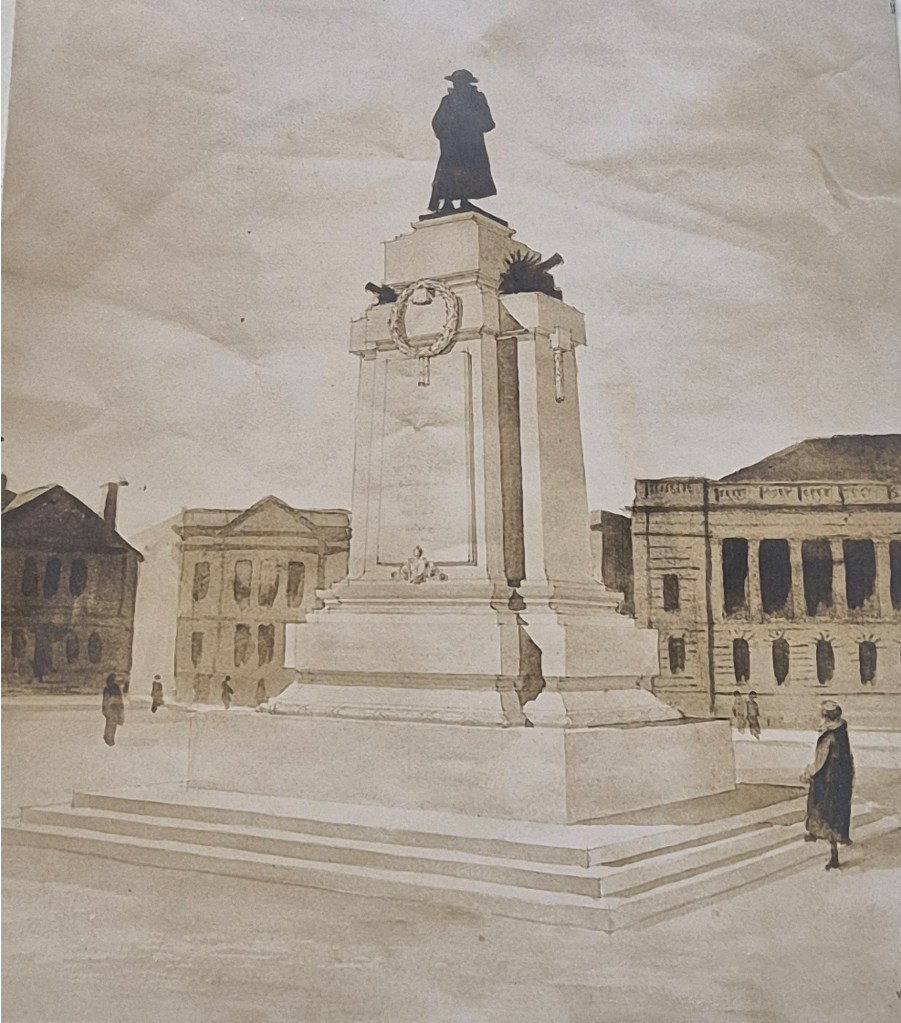
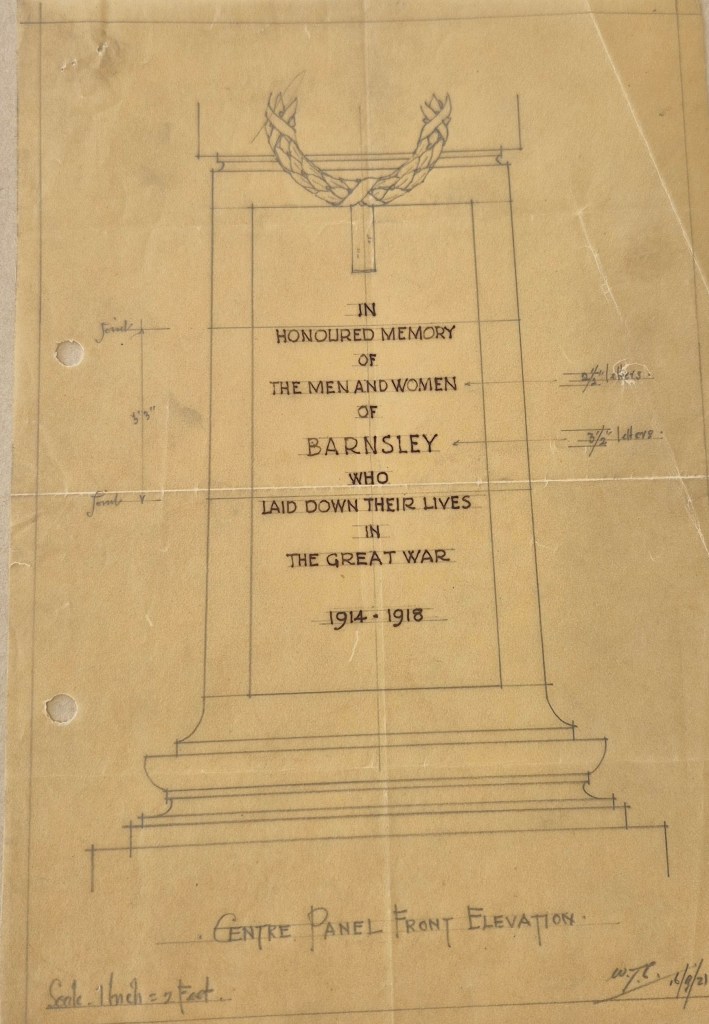
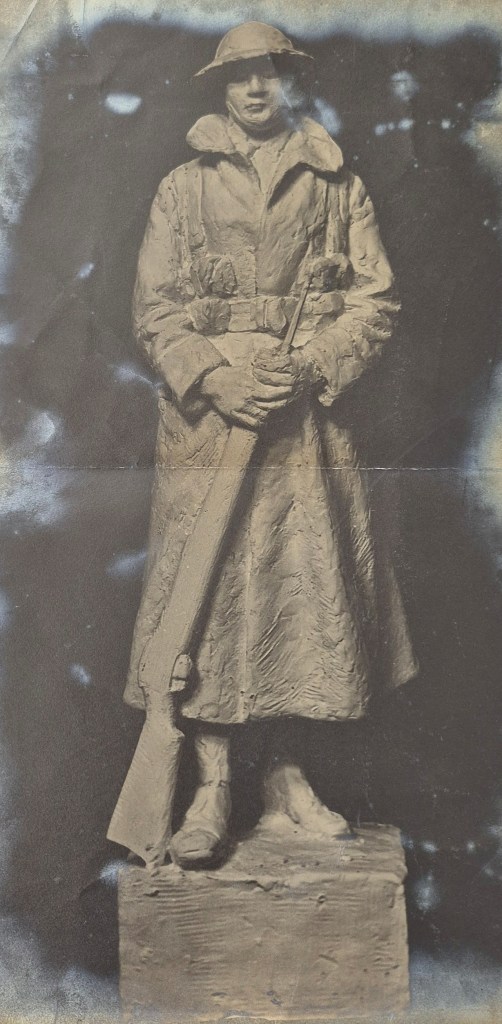
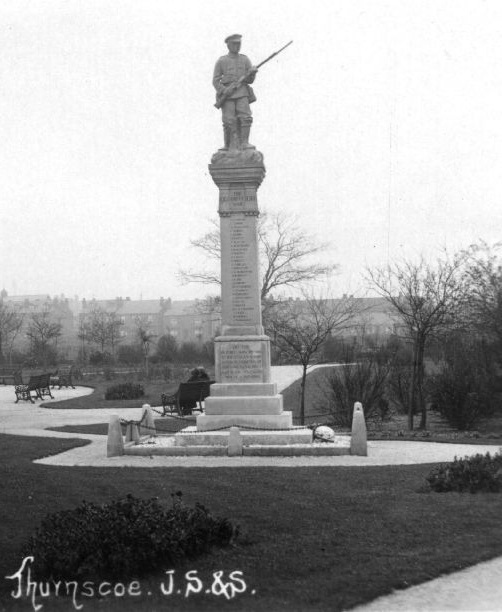
In Barnsley Archives there is a small collection of material about the unveiling event. As you can see from the pictures above the original plan differs from the final memorial, ever so slightly.
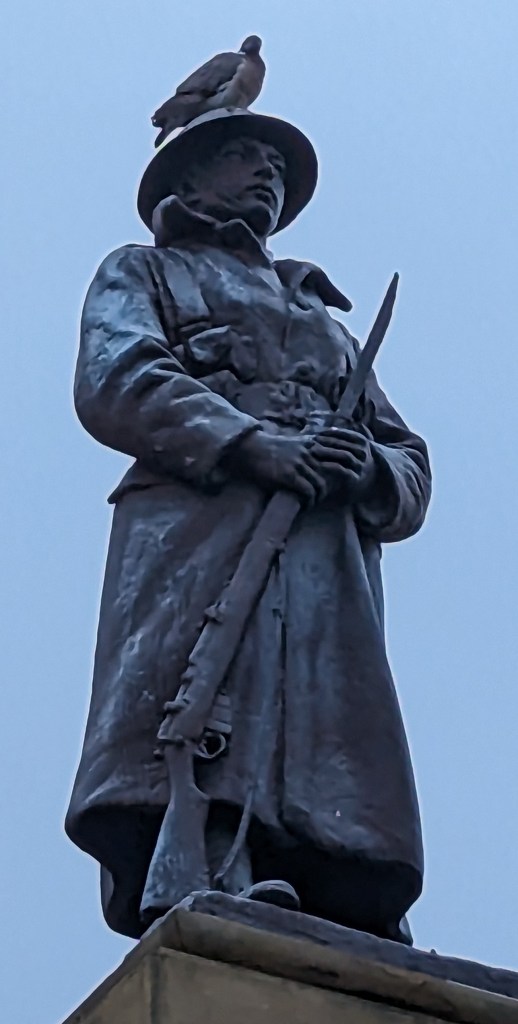
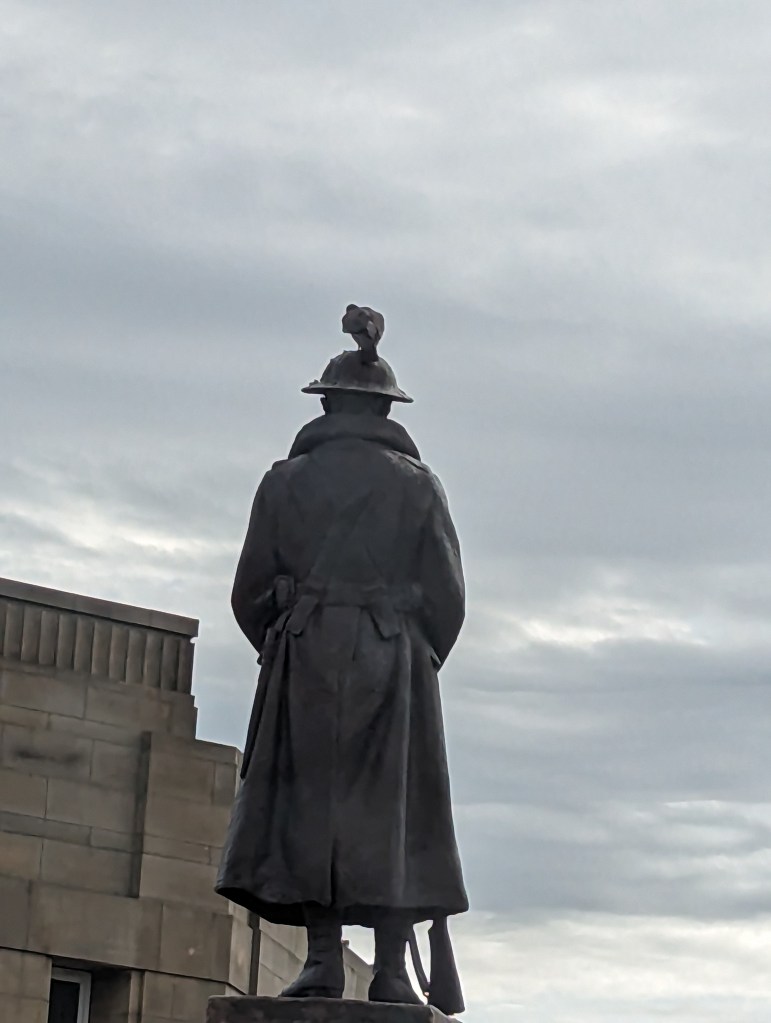
A couple of more recent shots of the unknown soldier, when looking through the photos on my camera reel there is always a pigeon perched on top!
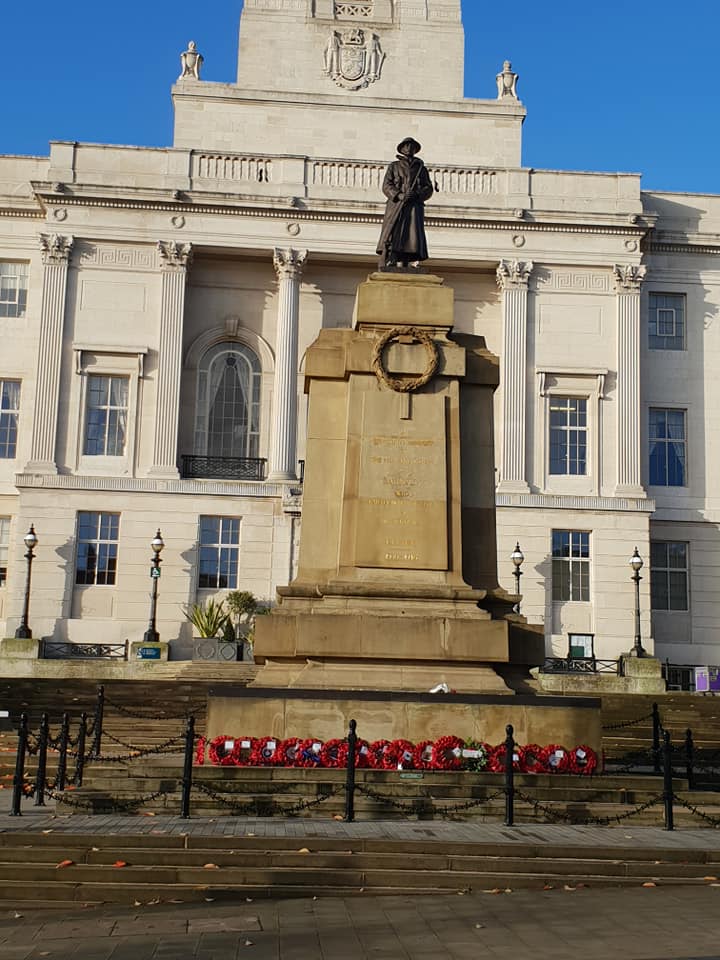
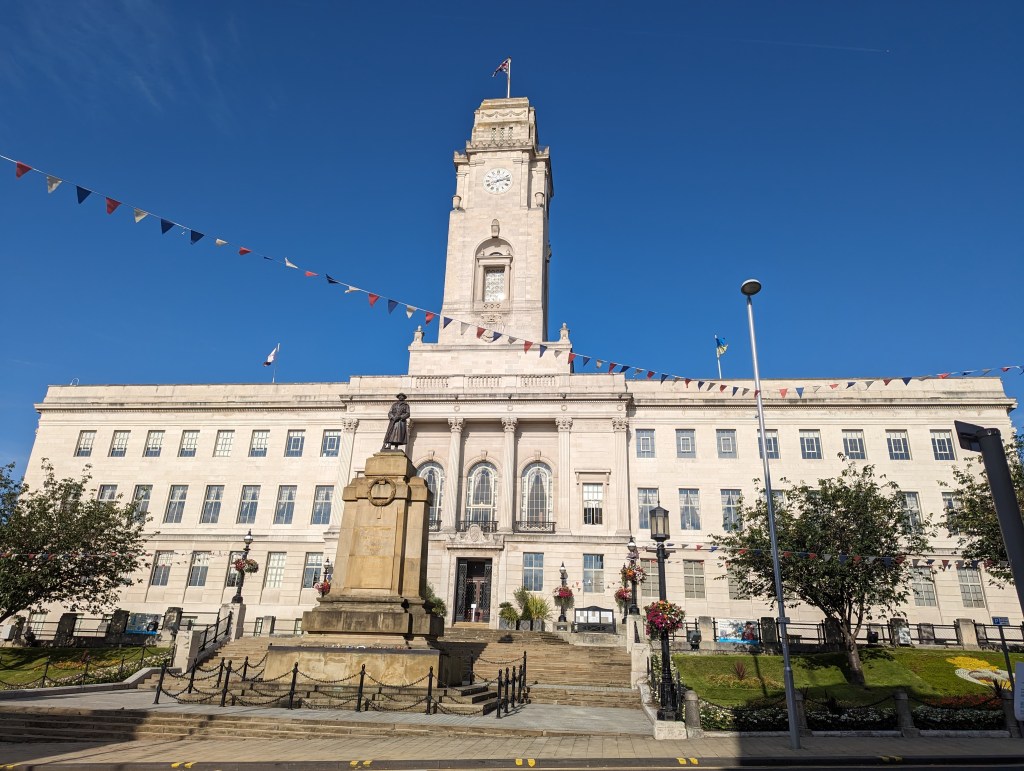
Since the memorial was unveiled on Sunday 11th October 1925 it has become a place of remembrance where are a town can come together to commemorate and remember those who made the ultimate sacrifice.
How did the war memorial come about?
To attempt to answer this question I began searching The Barnsley Chronicle – Unlike when I was researching the history of the town hall I haven’t unearthed a long forgotten Christmas carol. Yet.
One of the first mentions I discovered was in a newspaper published in December 1918, so less than a month after the end of the war. It was decided that a War Memorial Committee would be set up. This decision was made by the Mayor at the time, Colonel W M Raley who went on to have a significant role to play in the memorial, I’ll come back to him later in this blog.
In early discussion about what a lasting memorial could look like a sculpture wasn’t the first suggestion. Two initial ideas were a mining school or an extension to Beckett hospital. It was agreed from the outset that representatives from the various Urban District Council’s would be invited to meetings, although it was expected that they would rather start work on other memorials.
In another article dated September 11 1920 it was decided that the memorial would be in the form of a monument and the names of all the Barnsley fallen would be inscribed. The Barnsley War Memorial Group did a lot of research into this in 2015 and it doesn’t appear that a WWI roll of honour was ever produced at the time and Barnsley’s comprehensive roll of honour was published in 2019 and is available online.
A Barnsley Crowdfunder
In the next couple of years that followed, Barnsley came together in lots of different ways to raise money. Originally the War Memorial Committee had envisaged that the monument would cost in the region of £10,000, however it was soon realised that this was far too ambitious an ask, and was reduced to £5,000 and an architect, John Tweed was appointed.
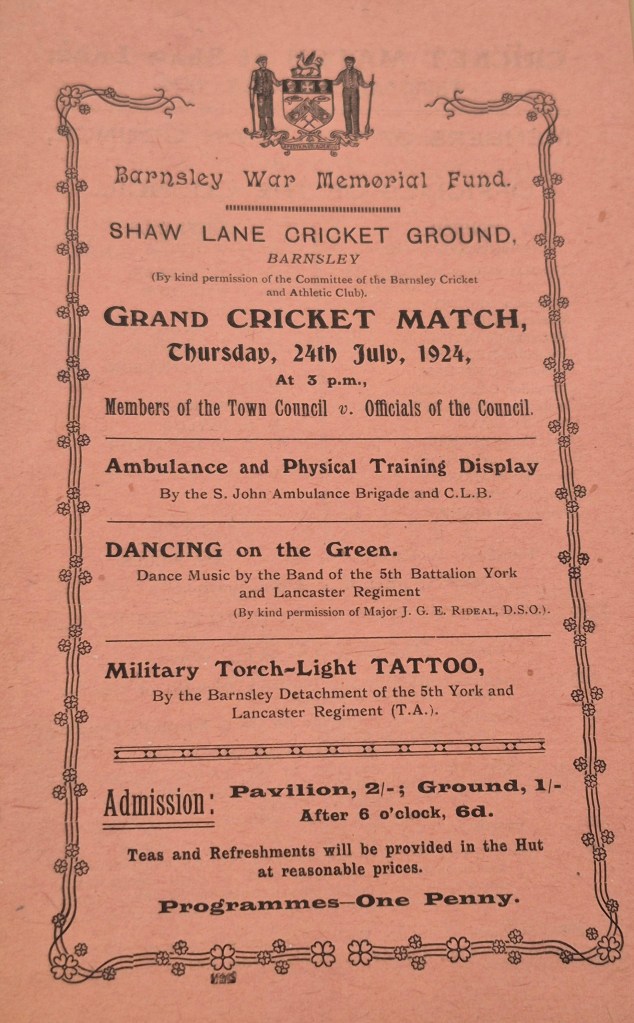
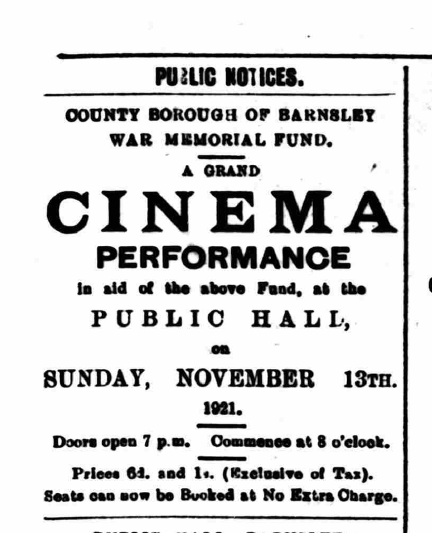
Alongside concerts at The Public Hall there were charity football matches at Oakwell and a game of cricket at Shaw Lane which helped raised the needed funds. The Barnsley Chronicle reported that almost two thirds of the cash had been raised by summer concerts in Locke Park. By February 1923 the statue was ready but only £2,800 had been collected so far and a suggestion was made to approach the Licensed Victuallers Association to contribute. A full list of those who contributed is part of a Barnsley Archives collection
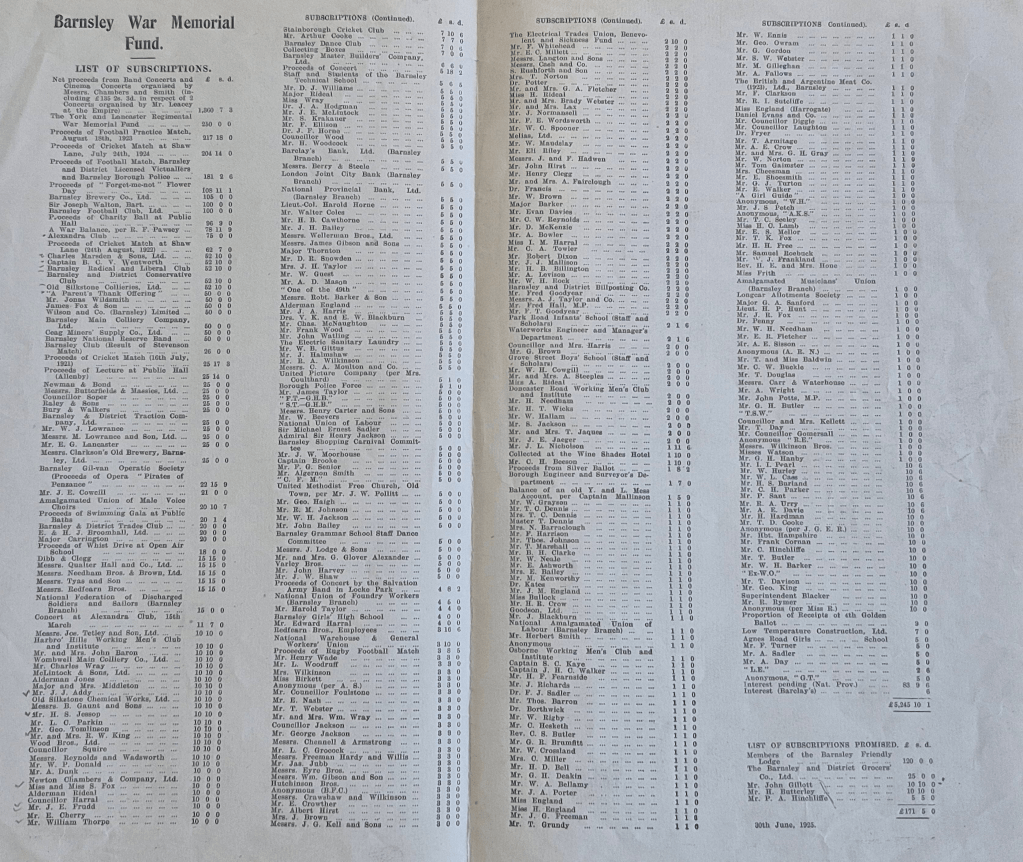
When questioned about the appeal in September 1925 Alderman Raley said “I feel ashamed that the appeal was not more successful if it had not been for the efforts of Mr Chambers and Mr Smith, the organisers of the Locke Park concerts we should still be appealing for the bulk of the money” There must have been some last minute donations as another article in November 1925 described the memorial as being ‘debt free’
John Tweed The Sculptor
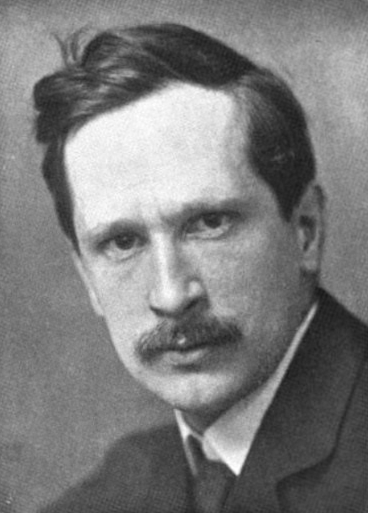
John Tweed was a Scottish sculptor, born in Glasgow in 1869 he studied part-time at Glasgow School of Art before moving to London where he assisted the sculptor Hamo Thornycroft. In 1893 he moved to Paris to continue his studies at the École des Beaux-Arts when he returned to London he took up a full time career as a sculptor. Tweed was responsible for the marble bust of Joseph Chamberlain in Westminster Abbey, the statues of Lord Clive in London and Calcutta and the monument of Captain Cook. Another war memorial he was involved with was at the House of Lords in 1932 You can see more of his work on the Art UK website
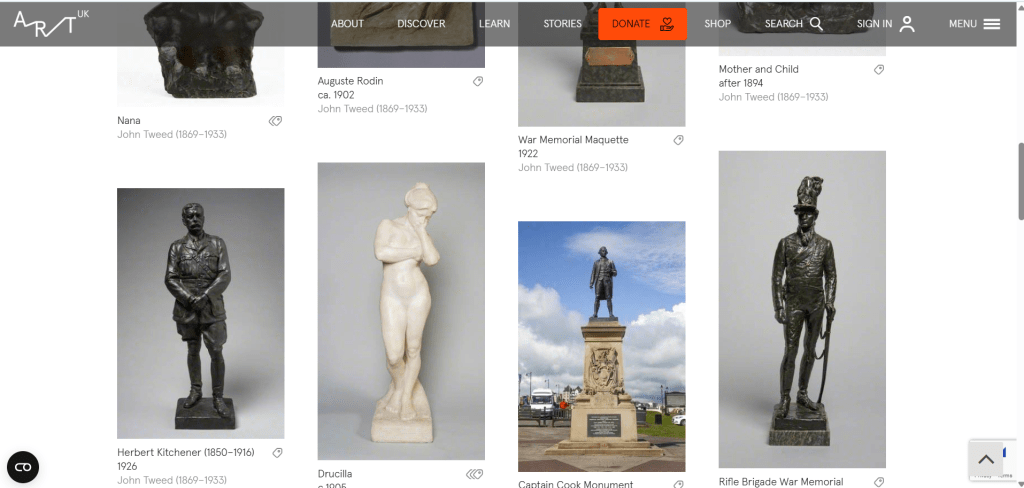
Tweed’s commission in Barnsley wasn’t without its controversies.
The bronze casting had to be done in Brussels instead of Barnsley due to costs and craftmanship. At this time the War Memorial Committee had come under scrutiny for some other last minute decisions, such as the unknown soldier wearing a steel hat and overcoat but it was explained that the sculpture was too far into the production stage for it to be modified further.
The architect behind the memorial was W T Curtis and the stone work was executed by George Haigh and sons of Barnsley and the carving was carried out by Messrs. John Robinson of Halifax
The Ceremony
“We want the parents and relatives to feel its meaning we want every man, woman and child to realise what this memorial stands for. I never salute one without thinking whether we give them their just due. I’m sure this memorial in Barnsley will get it”
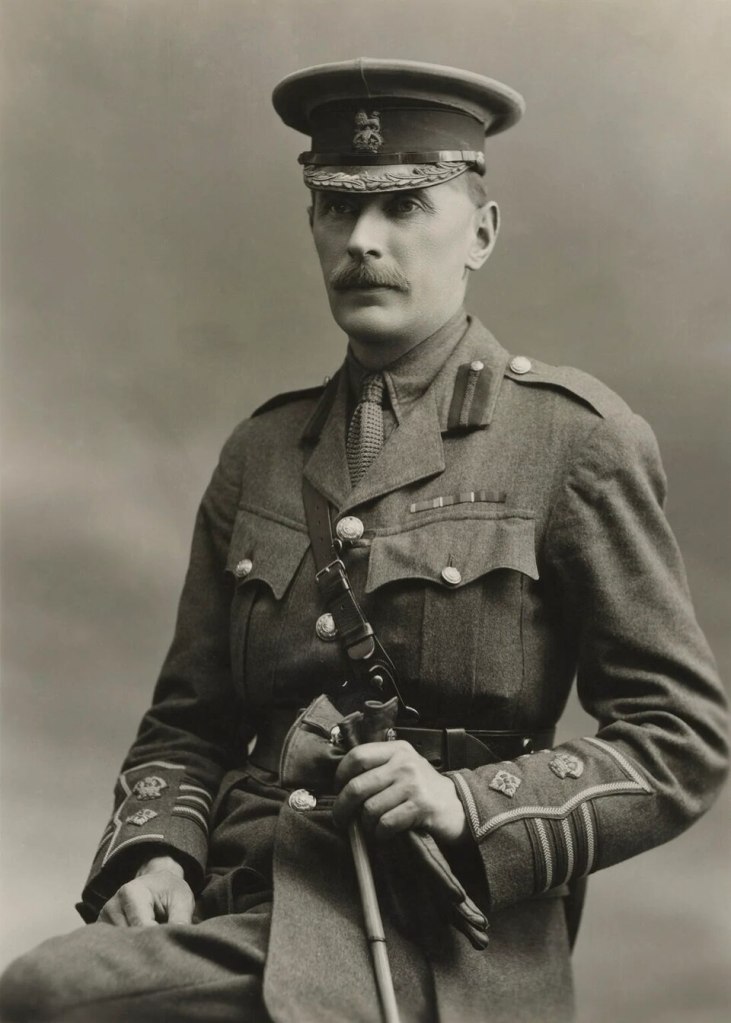
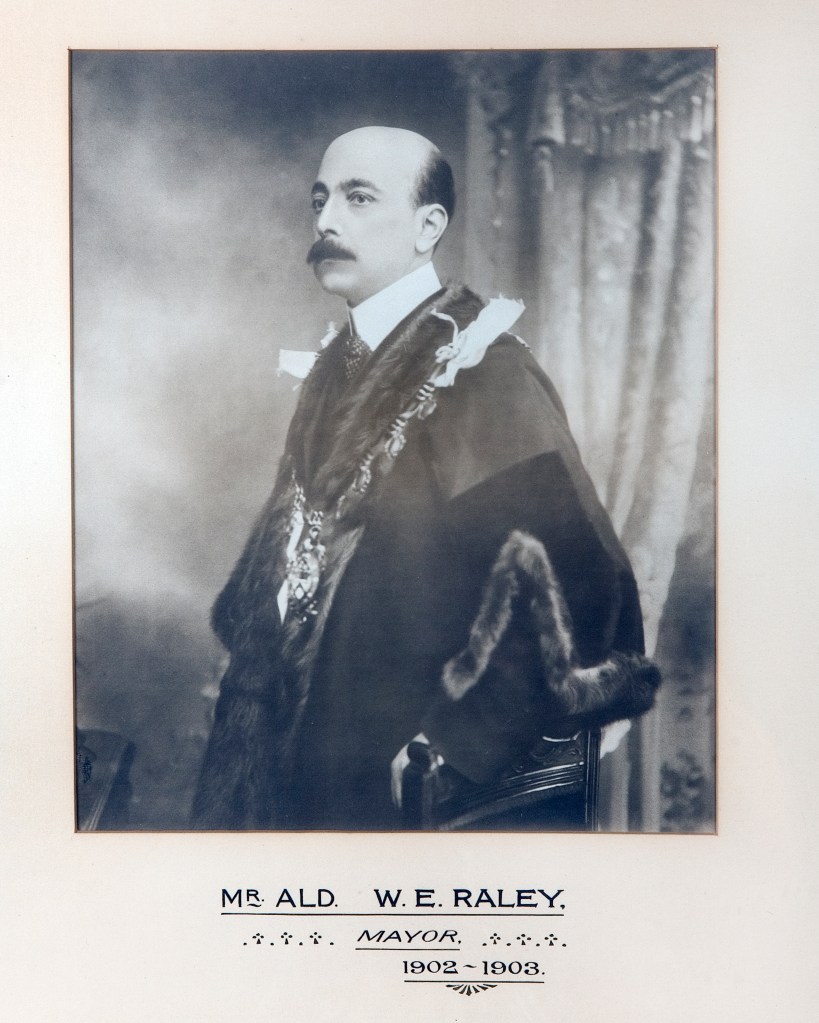
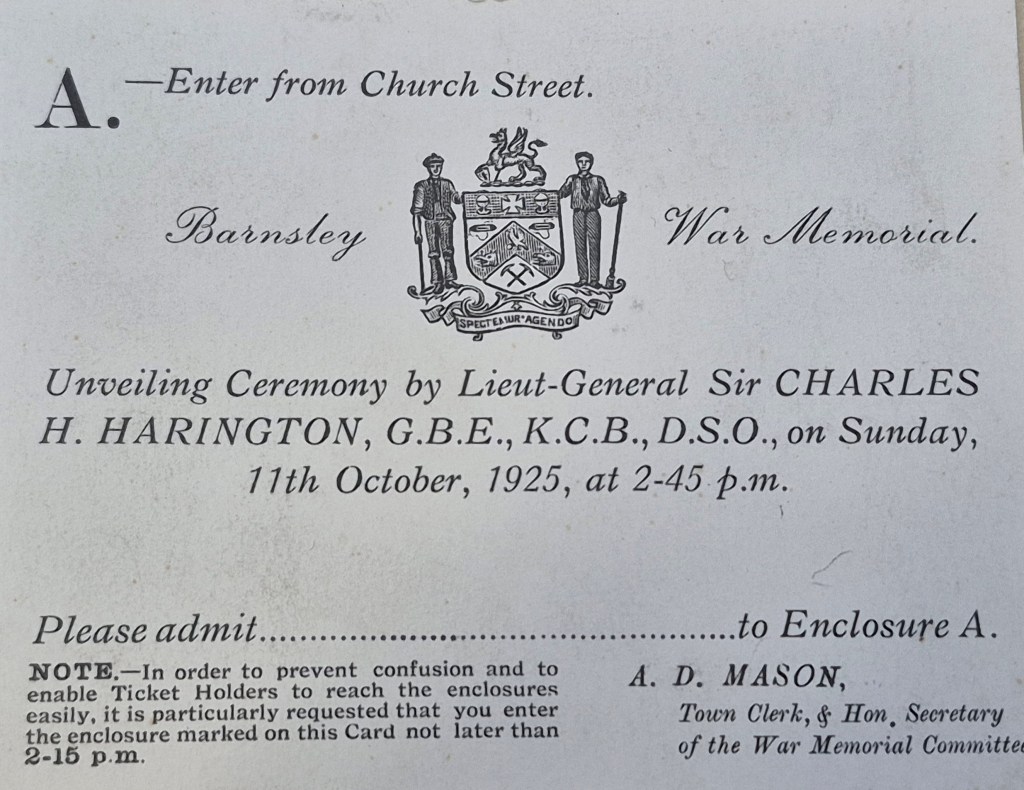
Those were the words of Lieutenant General Sir Charles Harrington who gave the speech on the day. He was in charge of the Northern Command and was formally in command of the British forces in Turkey where he was instrumental in averting a war between the United Kingdom and pre-republic Turkey. Alongside him was the Mayor of Barnsley, George Fred Wood and Lieut-Col William Raley whom the mayor said he couldn’t think of anyone else more suitable. The former mayor played an important role in the Barnsley’s war effort; he had the task of raising the First Barnsley Battalion and acted as the second in command during their training. He was also the Commanding Officer for the Second Battalion and in 1921 was granted the Freedom of The Borough
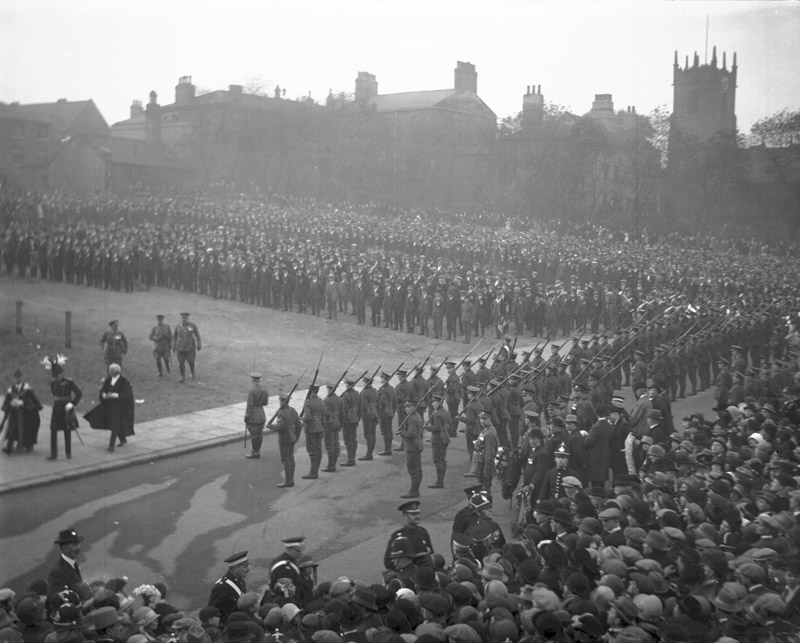
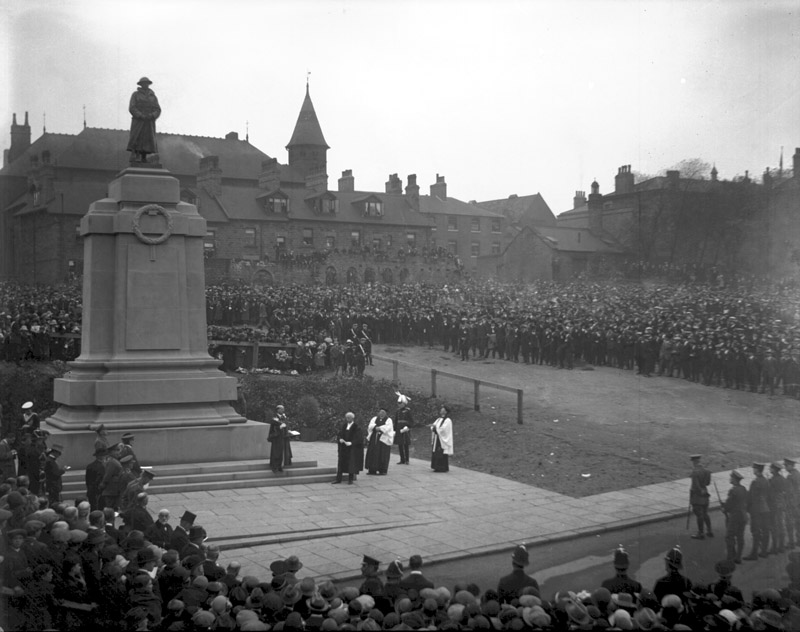
On the day the first row had been reserved for relatives of fallen soldiers and the Barnsley Chronicle reported that children were wearing their fathers medals. A large procession made its way down from Churchfield and the parade included more than 500 ex-Servicemen. Everyone gathered at the memorial at 2:45pm for the unveiling of the memorial by Sir Charles Harrington which was dedicated by the Very Rev. Dean of York, William Foxley who was a former Rector of Barnsley.
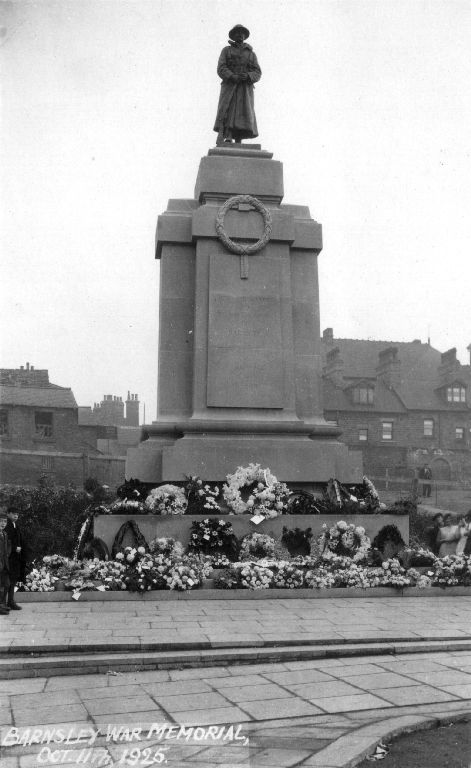
Thousands of people from Barnsley and beyond visited Barnsley on the day to see the new memorial and there were special floodlights so visitors could get a good view. As this photo shows the front of the memorial was covered in wreaths this included Barnsley County Borough Police, Rotary Club, Barnsley Amateurs F.C and St Johns Ambulance.
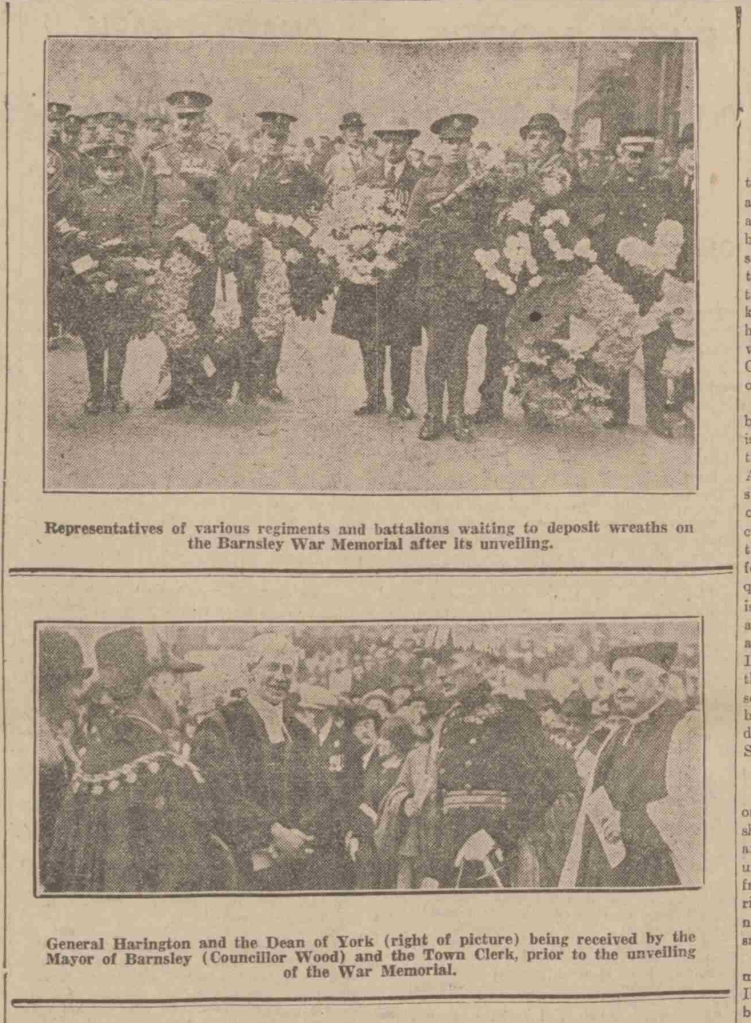
The unveiling ceremony was reported in several newspapers across Yorkshire including the Sheffield Daily Telegraph who published these two photographs.
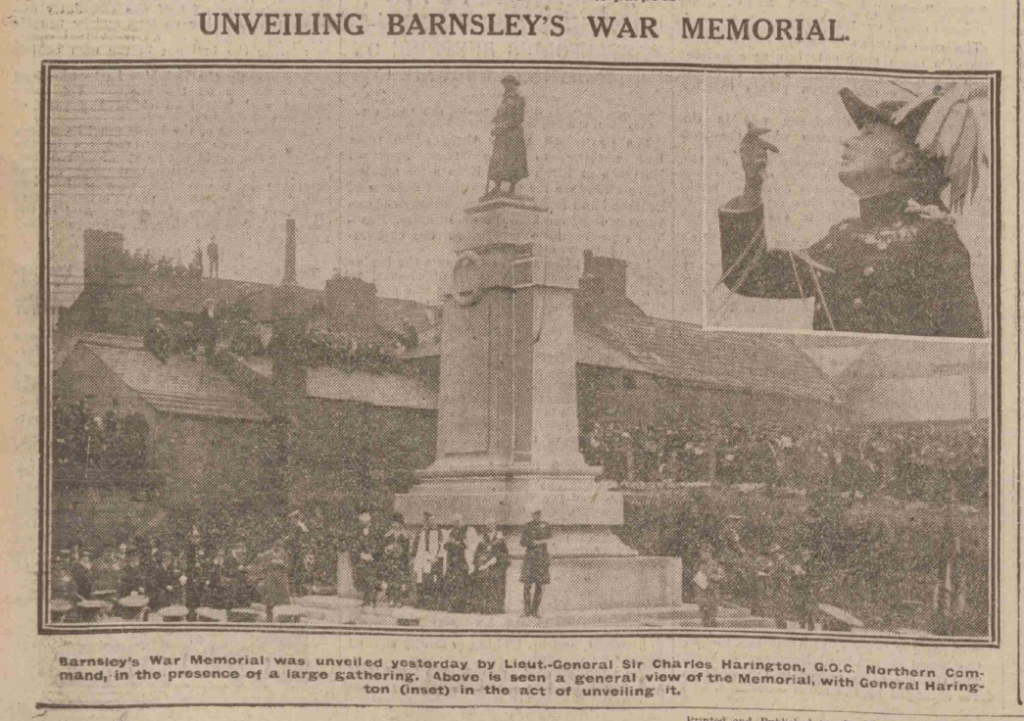
The photo used by the Leeds Mercury shows a different angle from the unveiling which puts the scale of the crowds of the day into perspective as it shows several people stood on nearby buildings to get a better view of the event. It also suggests that the unknown soldier was covered up on the day as Sir Charles Harrington can be seen pulling at strings whilst looking up at the memorial. The British Newspaper Archive is an amazing resource which is free to use when you visit Barnsley Archives or any Barnsley Library.
100 Years of Rememberance
In the 1940s the memorial was updated to reflect the Second World War and ahead of Experience Barnsley opening in 2013 the unknown soldier and stonework were conserved and cleaned. The one thing that hasn’t changed in the last hundred years is that it has been a place in town for people to come together. Queen Elizabeth II paid her respects at the memorial when she first visited Barnsley in 1954. Every November people crowd around the memorial for Armistice events, 100s of military parades have assembled in front of the town hall this year and countless anniversaries have been marked inluding more recently V.E and V.J Day
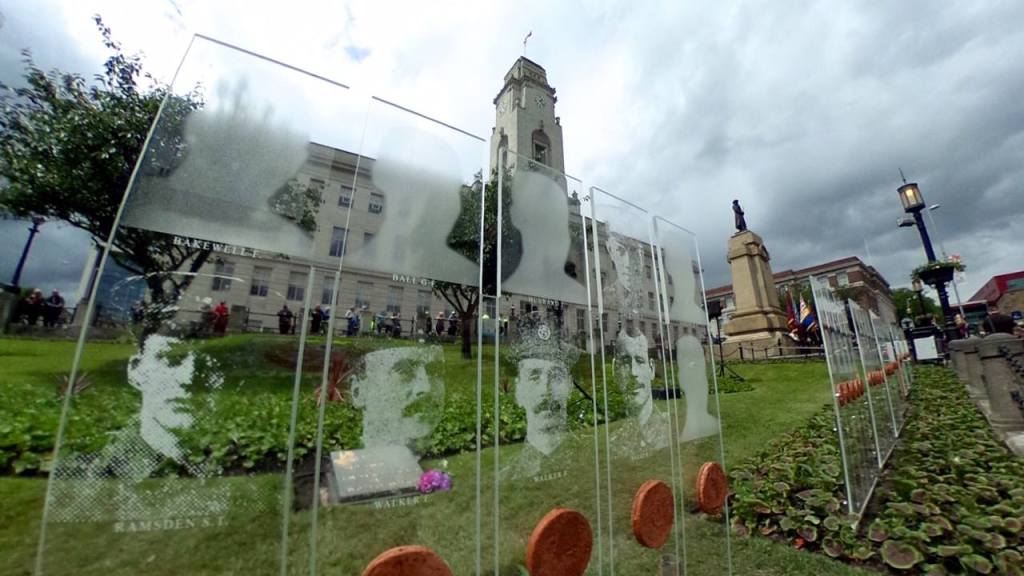
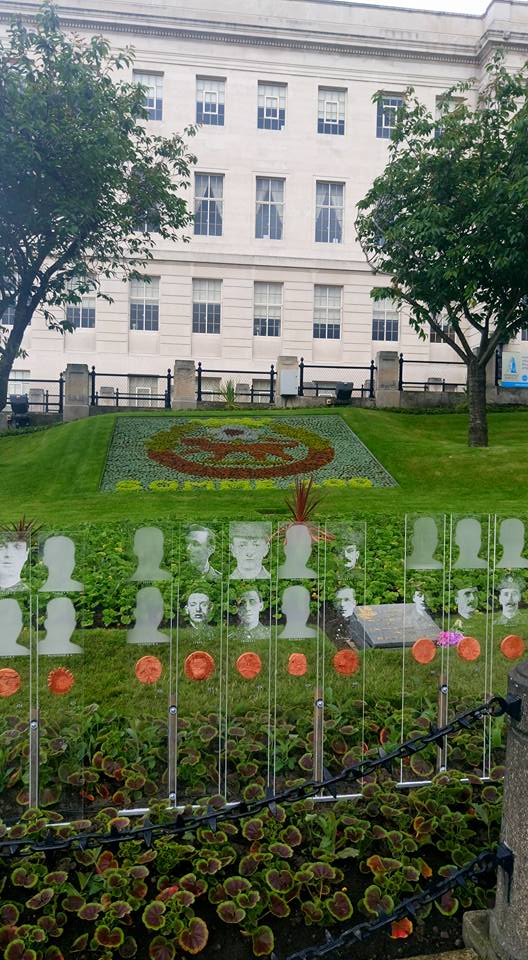
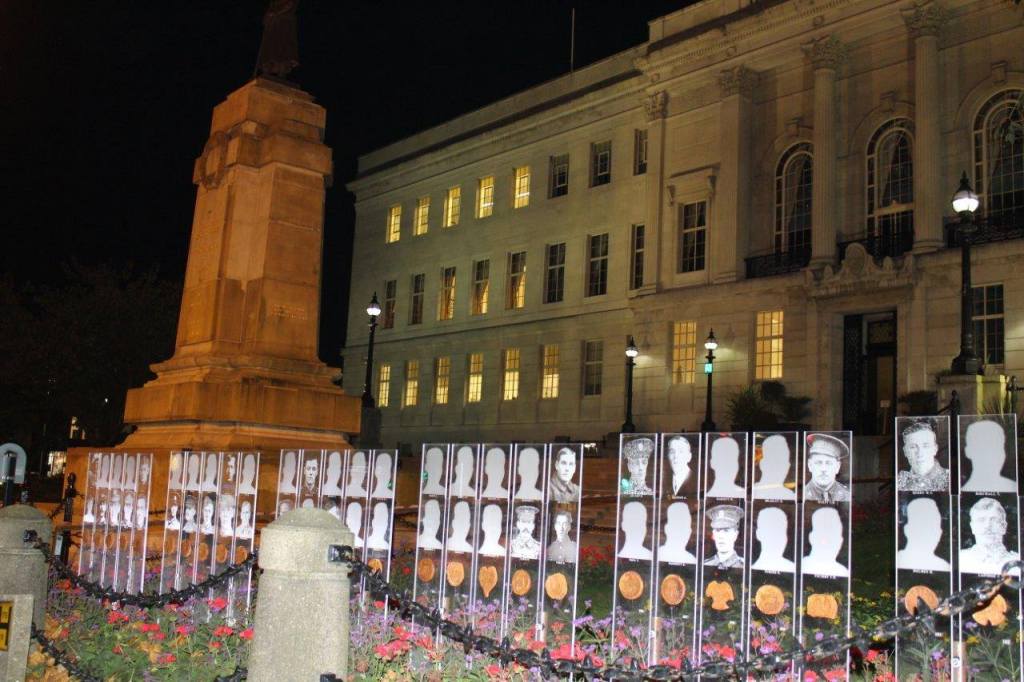
One of the standout events in my time working in the town hall was the Somme anniversary in 2016 and the creation of ‘Lightlines’ a then temporary art intallation that has now a memorial, rehomed next to Churchfield’s Peace Garden. The artwork commemorates one of the bloodiest battles of all time where 300+ Barnsley soldiers lost their lives. Read more about the Somme memorial
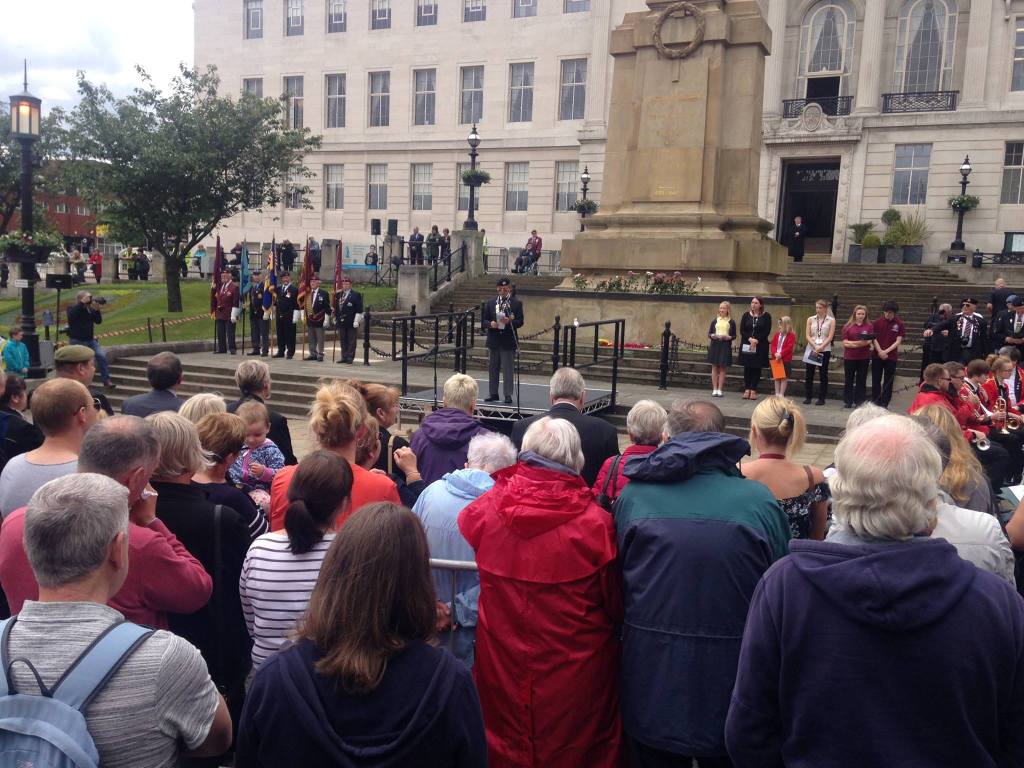
Barnsley War Memorial Poem
I’m ending this blog with a poem which was published in The Barnsley Chronicle at the time of the unveiling. I’d like to think that it was read out on the day. I’m sure these beautiful words will come to mind the next time I’m looking at the memorial out of the town hall windows.
Sleep on Brave Sons, sleep on
“Their Name Liveth Evermore”
This stone shall be a memory
Of heroes gone before.
They died at war, but now in peace
They live with God for ever
For whom they died, and why they died,
We’ll never forget -no, never!
This memorial serves a memory,
A memory sweet yet sad;
But consolation comes in this;
A Martyr was each lad.
Let not the sting of years ago,
Returned to mind and make hearts sore;
For this memorial stands to show
“Their Name Will Live For Evermore”
Subscribe to our blogsite to have latest articles sent straight to your inbox

 Barnsley Museums Blogsite