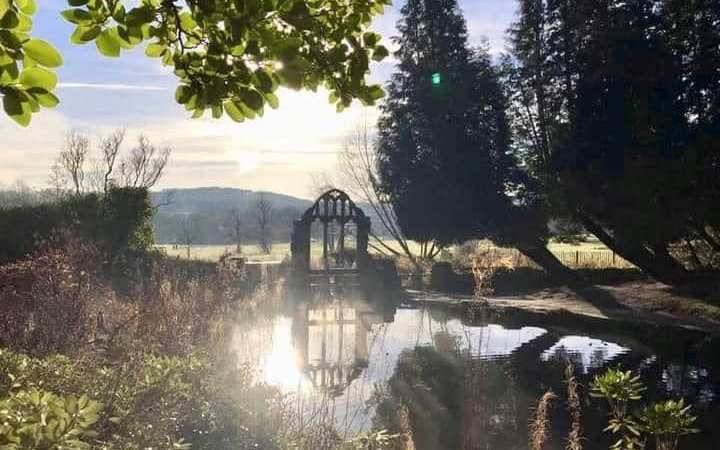
If you have visited the Fairyland area of Cannon Hall, Park and Gardens recently you will have seen that the plunge pool has undergone restoration work. As part of the restoration of the pool some other fascinating pieces of history were uncovered.
What is a Plunge Pool?
Before we go into history of the pool at Cannon Hall, some of you maybe asking yourself, ‘what is a plunge pool?’ To save you searching the internet, we did it for you: “A plunge pool is a smaller, more compact pool style that focuses on relaxation over any serious swimming”
The Spencer-Stanhope family lived at Cannon Hall for 300 years and during this time they re-modelled the mansion house and commissioned the design of its parkland. The parkland and gardens remain one of the best preserved examples of Richard Woods Pleasure Parks. Much still exits of this rich landscape style of pleasure and amenity gardens and is Grade II listed, with many follies and the Ha-Ha Grade II listed in their own rights.
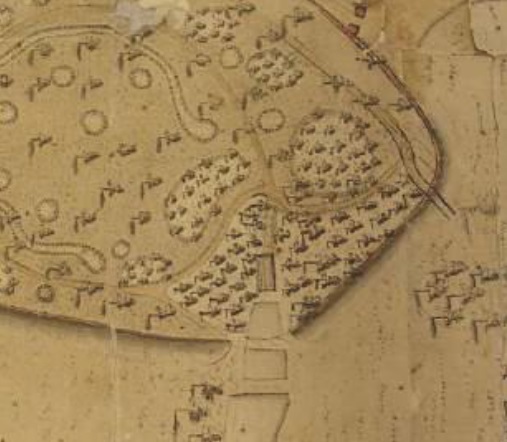
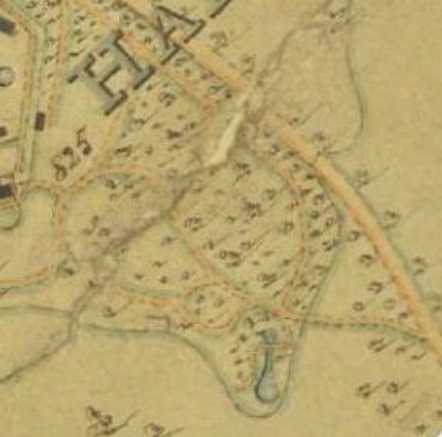
The re-modelling of Woods pleasure garden into Fairyland, probably around 1860-1870, was a collaboration between Cecily and her uncle: John Roddam Spencer-Stanhope, who was born at Cannon Hall, knew it well and was a frequent visitor. John Roddam Spencer Stanhope (1829 — 1908) was an English artist associated with Edward Burne-Jones and George Frederic Watts and often regarded as a second wave pre-Raphaelite. By 1891 the present ornamentation of architectural fragments was likely to be in place, the pieces of column and church windows are reputed to have come from the churches at Silkstone and Cawthorne.
What Might Have Influenced Cannon Hall’s ‘Cold Bath’?
One of the answers could lie in the Spencer Stanhope family papers, held by Barnsley Archives & Local Studies and the diaries of John Spencer:
“On August 7th 1750 John Spencer, who inherited Cannon Hall in 1756, visited the baths at Scarborough and ‘went to the rooms but did not drink the waters’.[1] His diary records that in the days prior to his visit he had been feeling unwell and was ‘taken ill in the night with violent Cholick’, so a visit to the thermal spa would have been medicinally appropriate for the period.[2] The following April John Spencer was again ‘indisposed’ with, as he records in his diary, ‘a good deal of Pain in my Legs’ and the following day he recorded that he ‘staid at Home the whole day, not being very well’.[3] His diaries fall silent for an entire month until on 15th May 1751 he wrote; ‘had a consultation of Dr Wilmot & Mr Sunny when Dr Wilmot orderd me a […] Drink for six weeks & to bath in the warm Bath for three weeks & after that to go to Buxton for a month’.[4] In the days and weeks following Spencer records his improving health and twice weekly visits to the Turks Head Bagnio (bath house) where he ‘bathd & layd there’.[5] Along with regular walks in the park and several days watching the England cricket team he ‘went in the Evening into the warm bath’ as directed by his physicians.[6] The medicinal benefits of both warm and cold water were widely known before the eighteenth century, yet it wasn’t until this time that its use became common practice and promoted by physicians who reinforced classical beliefs in the benefits of bathing.
[1] Diary of John Spencer (1750), Barnsley Archives, SpSt 60633/3.
[2] Diary of John Spencer (1750), Barnsley Archives, SpSt 60633/3.
[3] Diary of John Spencer (1751), Barnsley Archives, SpSt 60633/4.
[4] Diary of John Spencer (1751), Barnsley Archives, SpSt 60633/4. Buxton was and remains to this day a popular spa resort.
[5] Diary of John Spencer (1751), Barnsley Archives, SpSt 60633/4.
[6] Diary of John Spencer (1751), Barnsley Archives, SpSt 60633/4.
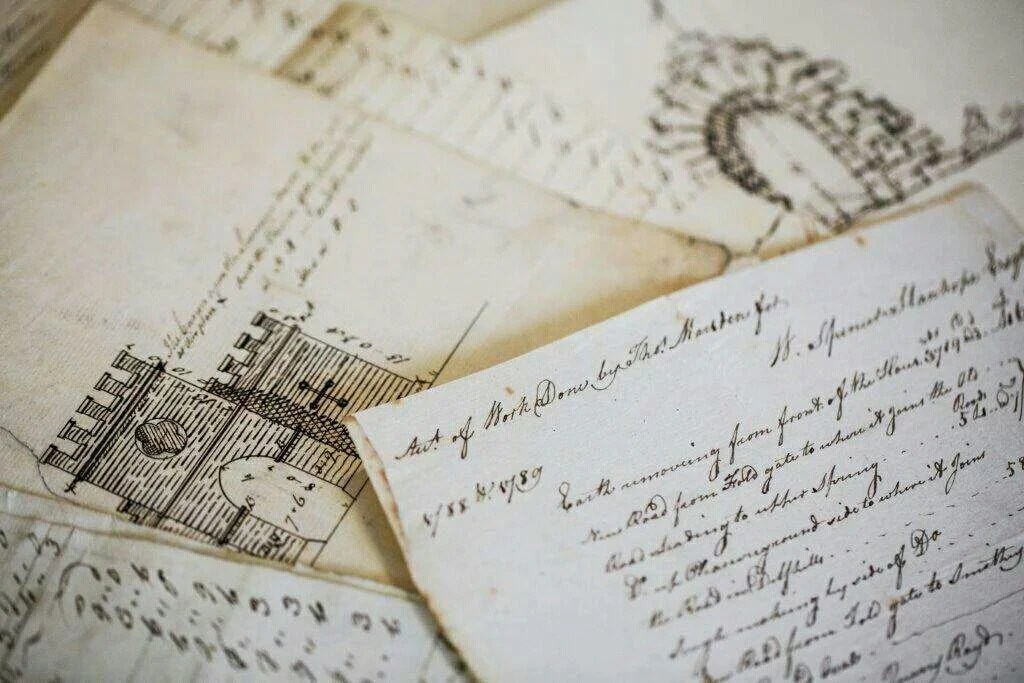
The Spencer Stanhope family papers are free to view at Barnsley Archives and Local Studies – please check opening hours before visiting.
Recent Restoration Work
In recent years, the west bank of the Plunge Pool has become unstable. Mason Clarke Associates were asked to provide structural advice and a method of repairing the bank. It was determined that water was running behind the stone wall, causing erosion of the soil and leading to the instability of the bank and stonework. To prevent the wall collapsing further, Furniss and Sons were instructed to install a propping solution until such time as funding could be sourced for permanent repairs.
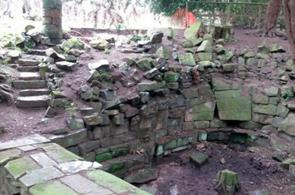
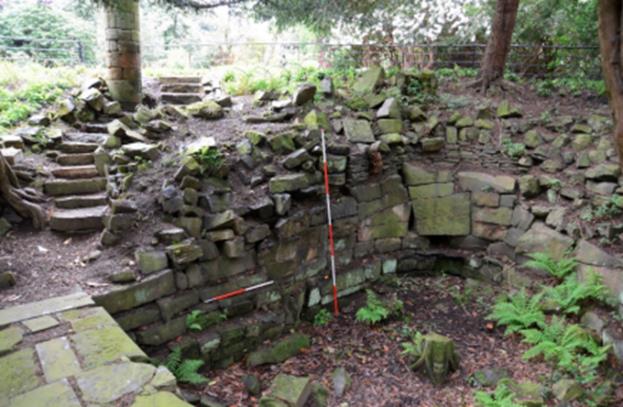
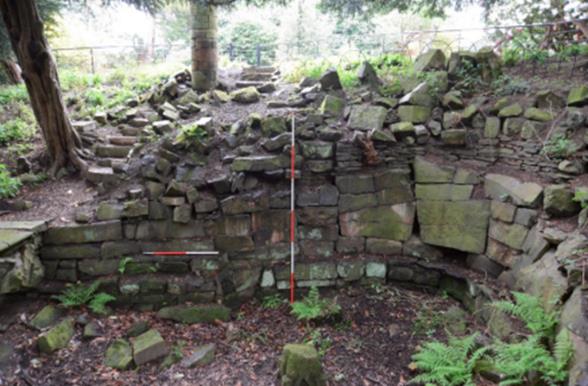
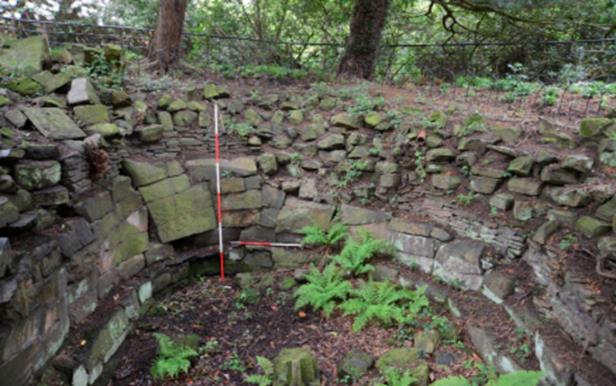
Photos of the Plunge Pool before the propping which show the surveying work
Photo credits: The Jessop Consultancy
Listed building consent was sought and approved for the repairs. Due to the historic past of the plunge pool and that an arrowhead had been found in a previous clear up excavation nearby, a Written Scheme of Investigation was required to be undertaken by an archaeologist as works commenced and progressed.
Following a competitive tender exercise, Furniss and Sons were appointed in August 2023 to undertake the works. Mason Clark Associates were commissioned as contract administrators and for structural engineering advice and TJC Heritage to fulfil the archaeological watching brief.
Fairyland Discoveries
Works began in late August 2023, with an estimated completion time of 8-10 weeks. As excavations commenced, a stone corbel which matches the ones on the south front of Cannon Hall, and in the architecture of Fairyland was uncovered.
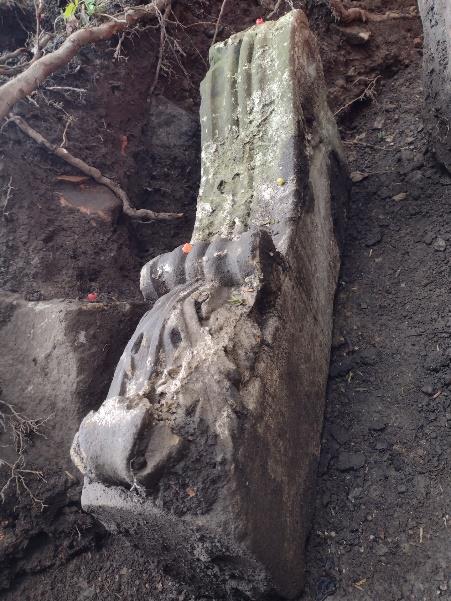
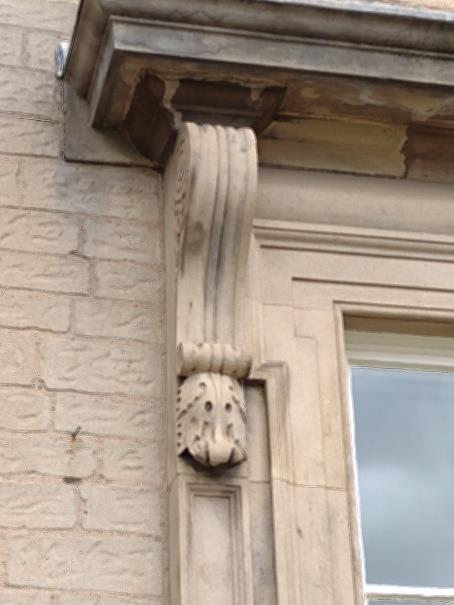
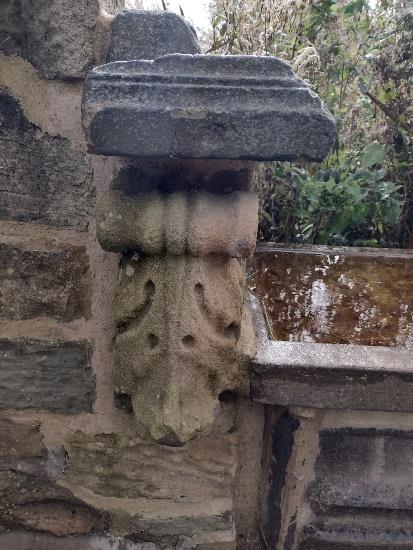
Excavated corbel, corbel on south front part of corbel in Fairyland architecture
As excavations continued, the contractors were surprised to find another wall made from handmade bricks dating back to around mid to late 1700s. The contractor explained that due to the quality of the pointing and the patina of the bricks on the facing side, it was very likely that this was a wall that was meant to be seen. From archive records, it can be seen that there was an earlier plunge pool on the site which was rectangular. Could this be the wall to the original plunge pool?
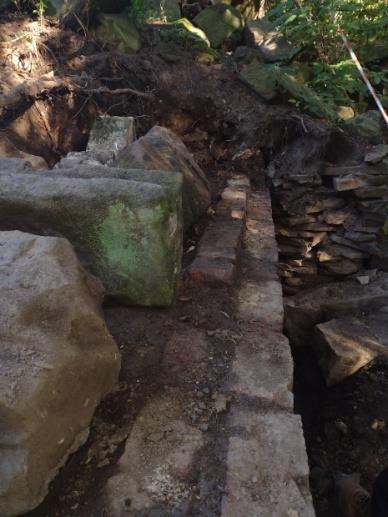
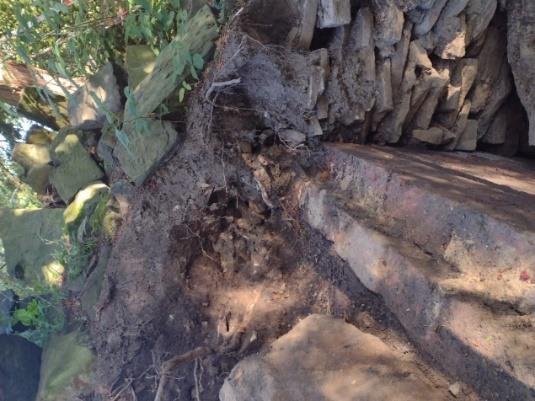
Exposed historic brickwork
The finding of the wall, though exciting, caused delays to the work whilst a plan was put in place that satisfied BMBC Conservation Officer, archaeologist and structural engineer. A decision was made that the historic wall should be taken down and rebuilt exactly once the water issue had been rectified, perhaps with a coin to date the reinstatement works.
Works recommenced and the historic wall was carefully taken down and a record made of the position of the bricks. As the excavation got deeper, it was discovered that the historic wall was built on a layer of larger rocks and shale. Perhaps even more surprising was the discovery of another water course!
The Conservation Officer, archaeologist and structural engineer were consulted once more. It was agreed that to be able to build back the bank securely, the historic wall couldn’t be reinstated. However, the bricks will be retained and used in the repairs to the walled garden in the future.
New Pipework Arrangement
The need to consult with experts meant work had to stop until new plans were available and approved. The Conservation Officer agreed with the new plans but advised to submit a change to the listed building consent which has been completed. Delays caused by the necessity to consult with experts and inclement weather has meant further delays to completion of the works.
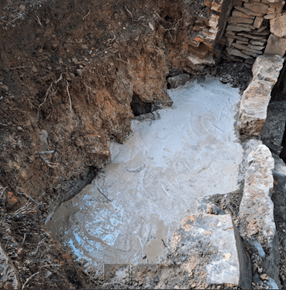
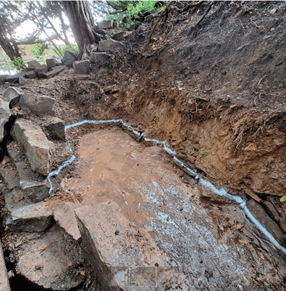
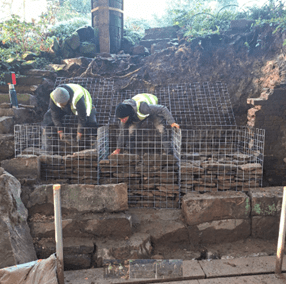
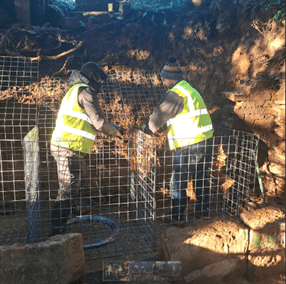
Over the past months, work has taken place to insert hand filled gabion baskets into the bank to reinforce it.
Before & After
Before:
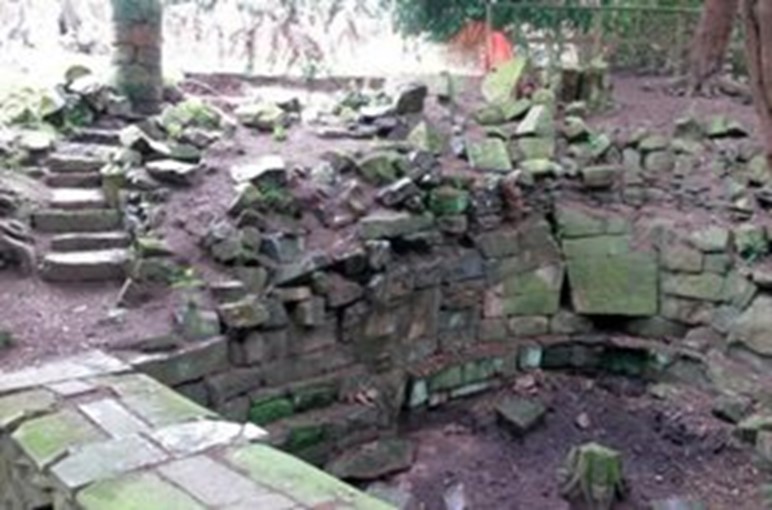
After:
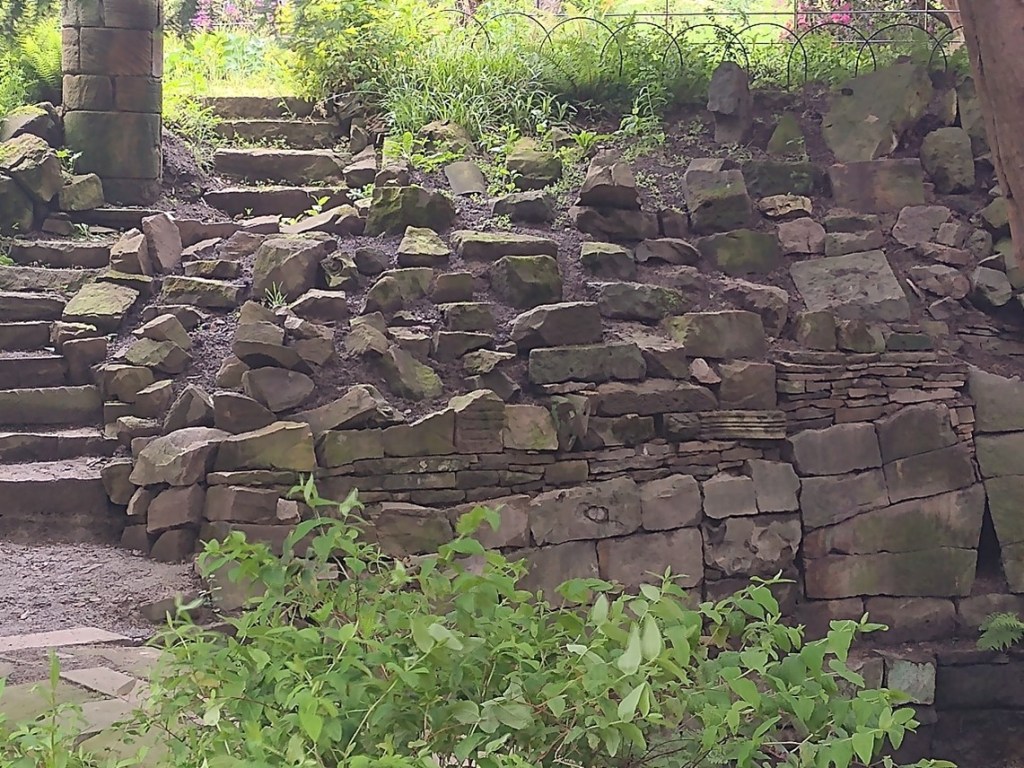
This important restoration work means that the plunge pool will has now been restored to its former glory and this precious piece of Barnsley’s history preserved for generations to come.
Here is a video of this part of Fairyland which was recorded as part of the Parks For People project back in 2019
Subscribe to our blog to be amongst the first to read new articles!

 Barnsley Museums Blogsite