On 1 April 2024, Barnsley Metropolitan Borough Council celebrated 50 years of public service to the communities of Barnsley. BMBC was formed from 14 previous councils in the area, plus taking on some functions from the former West Riding County Council, such as the library service. These changes occurred due to the Local Government Act of 1972, which significantly reduced the number of councils in England and also created the county of South Yorkshire to which Barnsley became the ‘county town’. To commemorate this milestone Barnsley Archives and Local Studies held a display showcasing items that provided a snapshot of activities over this time period. David Blunden community sector specialist officer looks at some of these items from the 1970s-1990s.
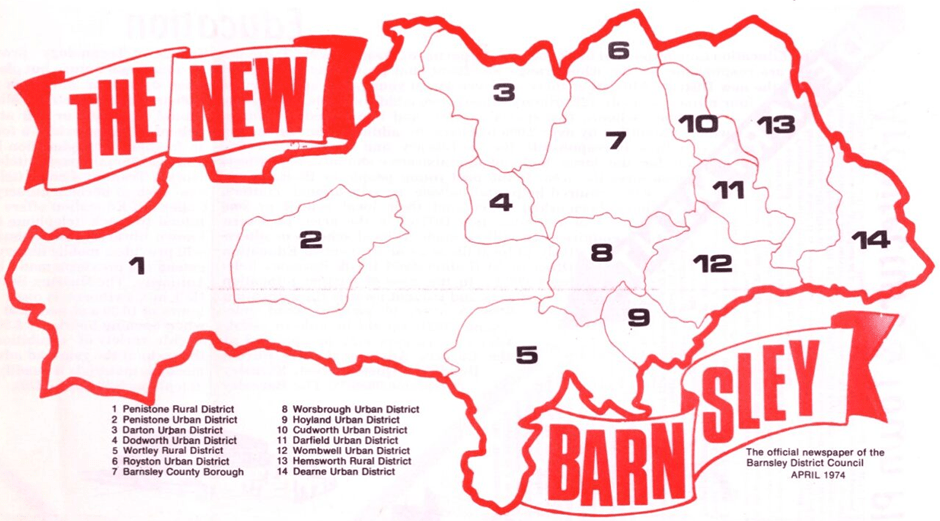
The new council
The idea of merging 14 councils into one is hard to comprehend, especially during a time when all documents were paper-based and official communication was primarily by post, as well as in-person meetings and landline. It would have been a huge task. A significant amount of work was carried out for two years by a joint working party before 1 April 1974 in an effort to combine procedures and make sure the same service was received by those in the west in Penistone across to residents in Thurnscoe in the east.
‘No other Authority in the country has been set the task of blending together 15 Authorities into one’ Brian Varley, Council Leader, 1974
To inform residents of the new borough, a newspaper called ‘The New Barnsley’ was printed and sent out to householders outlining the new services, as well as changes to councillors and ward boundaries. To allow the changeover to be as smooth as possible the majority of districts retained their local council offices and public facilities, such as libraries, in the early years of the new council. Residents could still go into their local office to make general enquiries, pay their ‘rates’ (council tax) and rent (if a council tenant) and have access to social services.
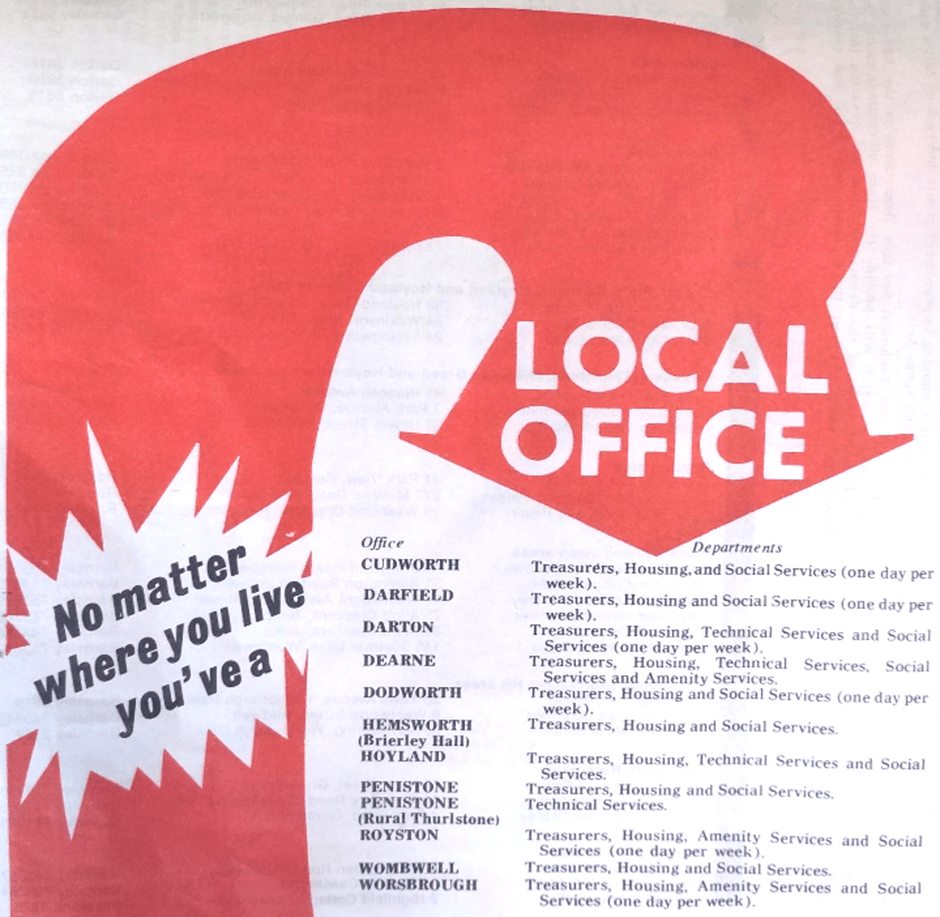
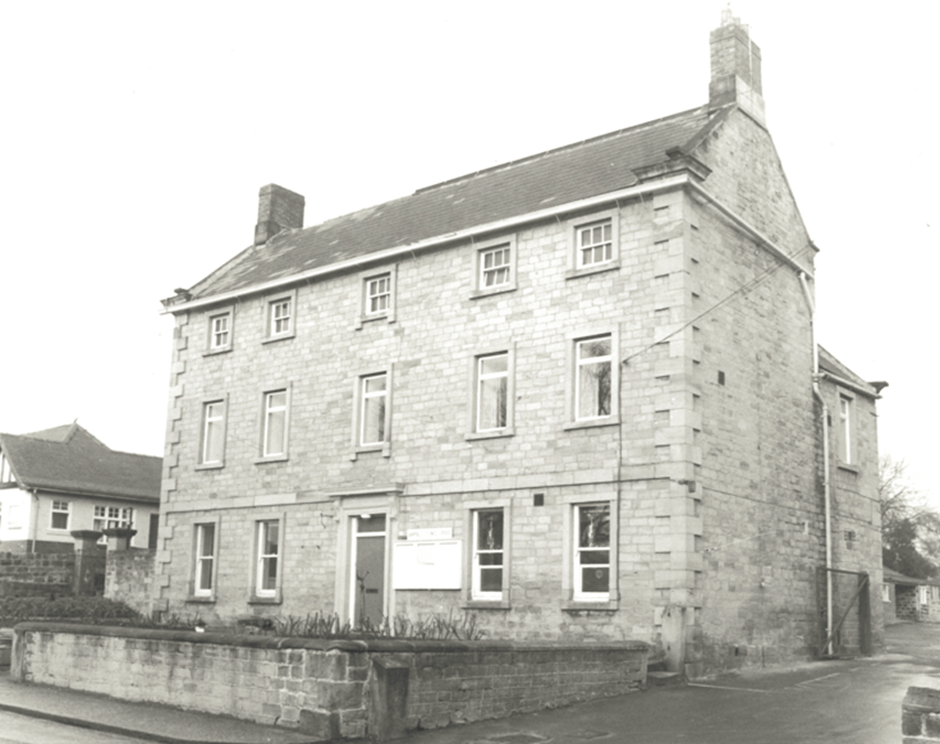
One of the district offices that was in use during this time was at Darfield. This was previously the home of Darfield Urban District Council and was located on Church Street, across the road from the library and clinic. This late 18th century former house was awarded grade II listed status in April 1985. After closure of the offices and a period of disuse, the building was refurbished and became part of Garland House Surgery.
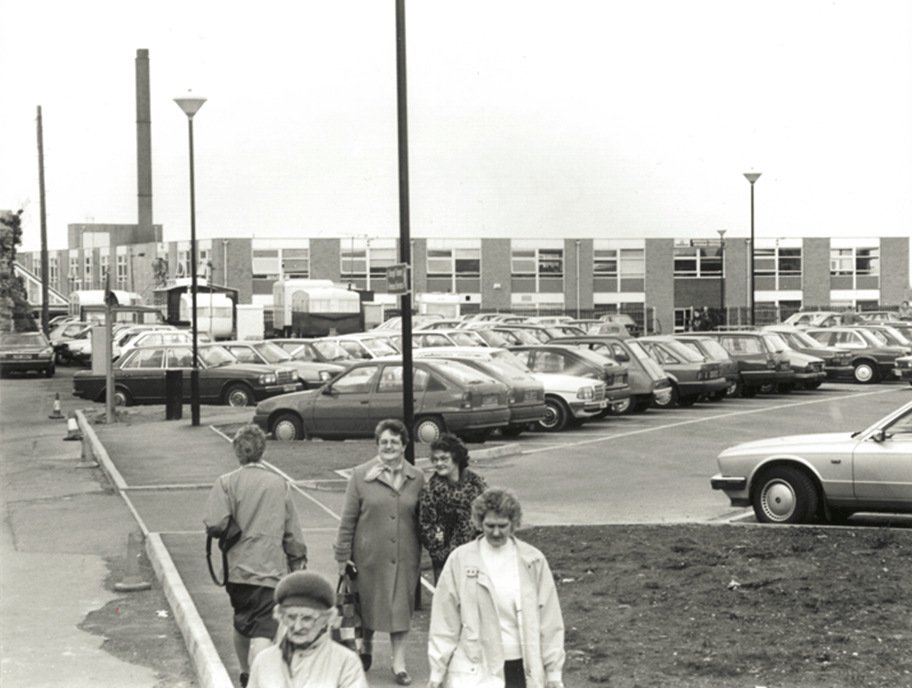
Barnsley Town Hall became the ceremonial headquarters for Barnsley Council, but there were still a number of other buildings in the town centre to cater for all the various responsibilities and services provided by the council. Regent House in Regent Street was the home of both the Architecture and Planning Department as well as Social Services. The Education Department and Amenities and Recreation were based at 50 Huddersfield Road and there were large council offices situated on County Way. Visitors to our display in the Town Hall recalled their visits to this building with relatives to pay their ‘rates’.
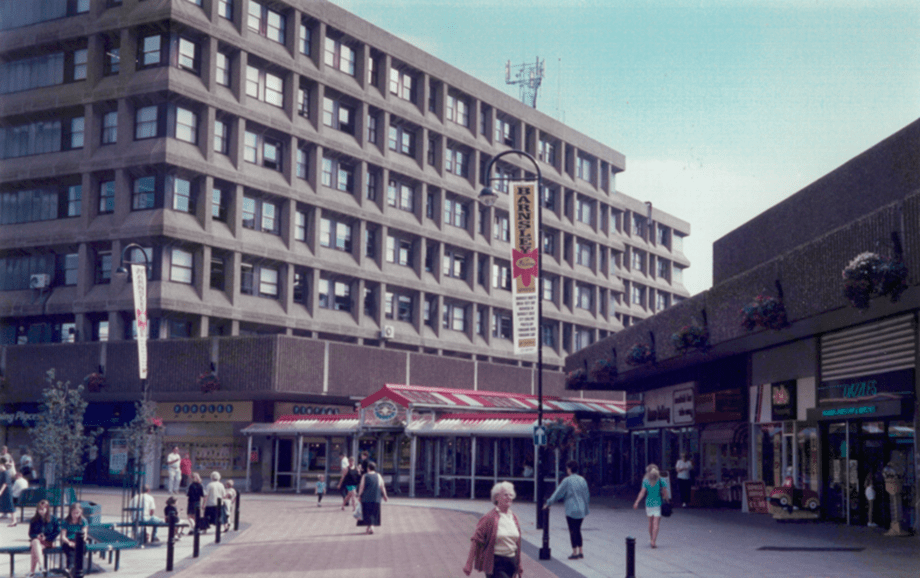
Perhaps the most dominant of the council buildings in the town centre during this period were County Hall and the Metropolitan Centre. These two buildings formed part of the Central Area Redevelopment of Barnsley in the 1970s. County Hall was originally leased to South Yorkshire County Council for their headquarters by BMBC. Both County Hall and the Metropolitan Centre were visited by H.M. The Queen and H.R.H. The Duke of Edinburgh in July 1975 shortly after opening. Staff and councillors used the buildings from 1975 and it was officially opened in March 1976. After the abolition of South Yorkshire County Council in 1986, the main building became known as Central Offices for Barnsley Council and the former Members’ Building on the corner of Kendray Street and Midland Street became Barnsley Conference Centre.
The Metropolitan Centre was opened in two phases. The first phase pre-dated BMBC in 1973, which included the main Charter Market Hall, Kendray Meat and Fish Market, Kendray Semi-open Market, May Day Green Open Market and Exchange Open Market. This phase was officially opened a few days before the new Barnsley Council on 27 March 1974. The second phase included the County Hall building, which also had 39 shop units on the ground floor. The name Metropolitan Centre was chosen by a member of staff as a way of signifying the beginning of the new borough.
Improvement Areas
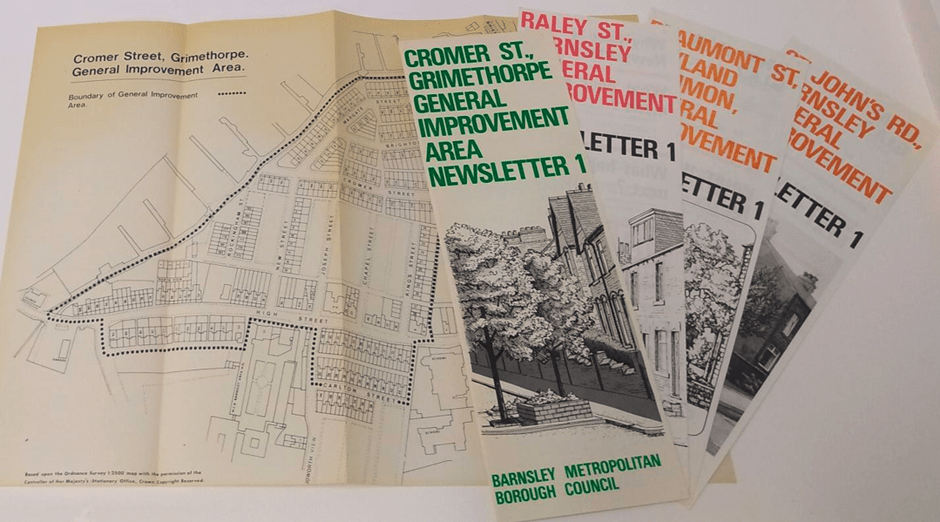
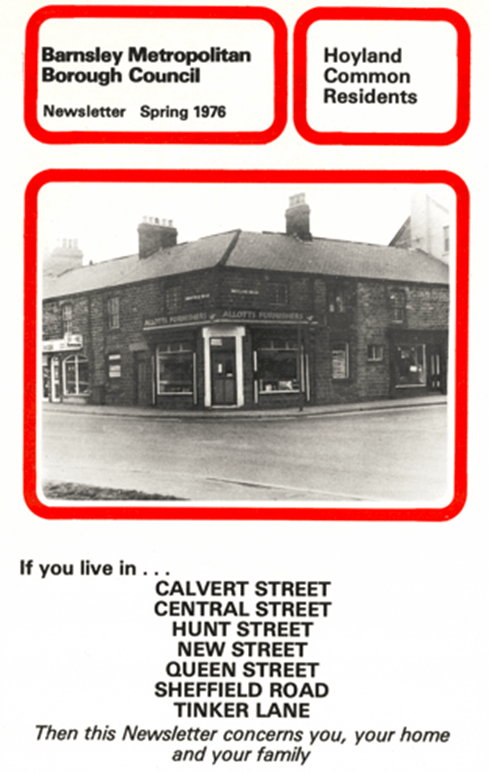
The reorganisation of local government led to changes in planning and the creation of Local Plans and General Improvement Areas. Barnsley Archives and Local Studies has a large number of these plans in our collection, which record changes to districts across the borough. General Improvement Areas were created with the aim of revitalising residential areas by making money available for environmental improvements such as play areas, tree planting and restricting through traffic. It could also be used by people for improving their homes by applying for grants. Newsletters were produced by Barnsley Council to inform residents of changes and any public engagement taking place.
Leisure activities
Our collections contain many booklets recording official openings of buildings and guides to services offered to residents. Some of these topics relate to leisure and recreation. Hoyland Sports Centre was one of the earliest developments to be opened by the new council in 1974. It was originally planned as a joint venture between West Riding County Council and Hoyland Nether Urban District Council before the final months of the build were overseen by BMBC. The facilities opened with swimming pools, squash courts, a multi-purpose sports hall and an activity area on the ground floor. The first floor facilities included a sauna, solarium, restaurant/bar and viewing galleries.
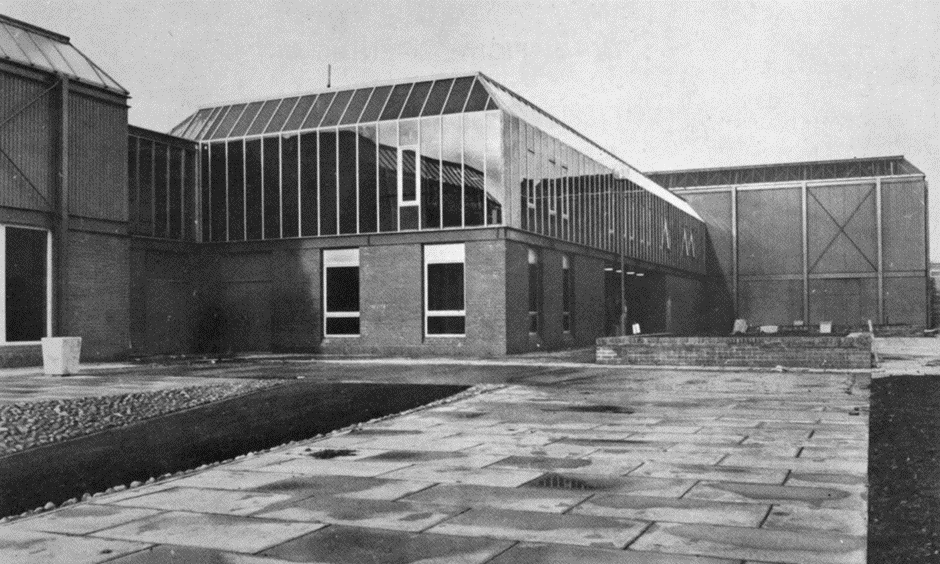
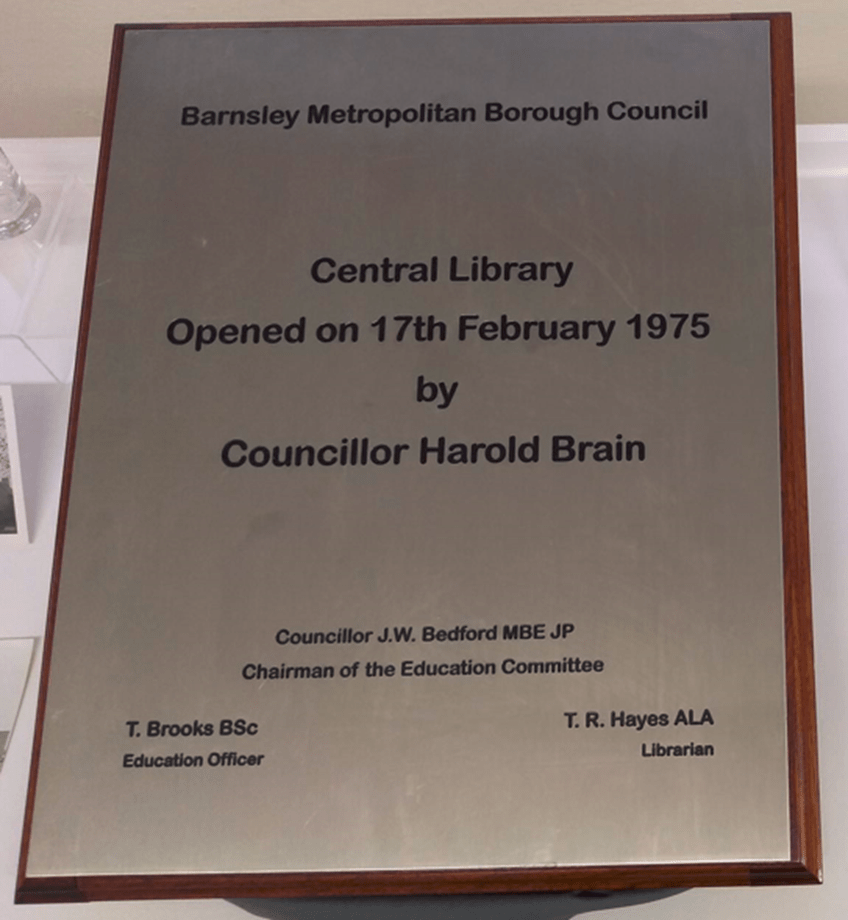
Another leisure and education building that opened in the early years of the council was the new Central Library in 1975. Construction had begun in 1973 under the control of Barnsley County Borough, although the building was designed with the aim of being the headquarters for the new metropolitan borough. The building was very modern for its time and attracted visitors in the library profession from across the country and beyond. It had a large open atrium-style central area on the ground floor with views up to the first floor. Some of the facilities available when the library opened included general reference and lending services, local history and music libraries, junior library with storytelling room, lecture/conference rooms and coffee bar.
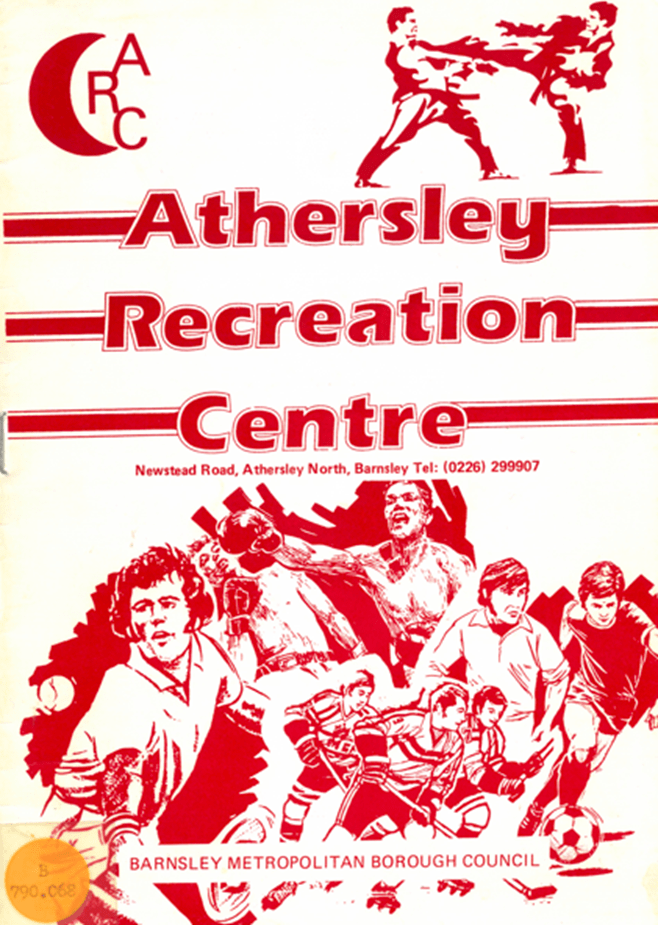
Further leisure facilities were opened in the 1980s including Athersley Recreation Centre in 1984 and the Metrodome in 1989. Athersley Recreation Centre offered a mix of activities upon opening, including the current trend of time – tri-skating (more commonly known as inline skating or rollerblading), where hiring of the boots was available. It also claimed to be the first centre in Yorkshire and Humberside to embrace the new sport. Do you remember skating in the main hall? Other activities included aerobics, badminton, basketball, indoor bowls, cricket, discos, football, gymnastics, martial arts, netball, table tennis, trampoline, volleyball and weight training.
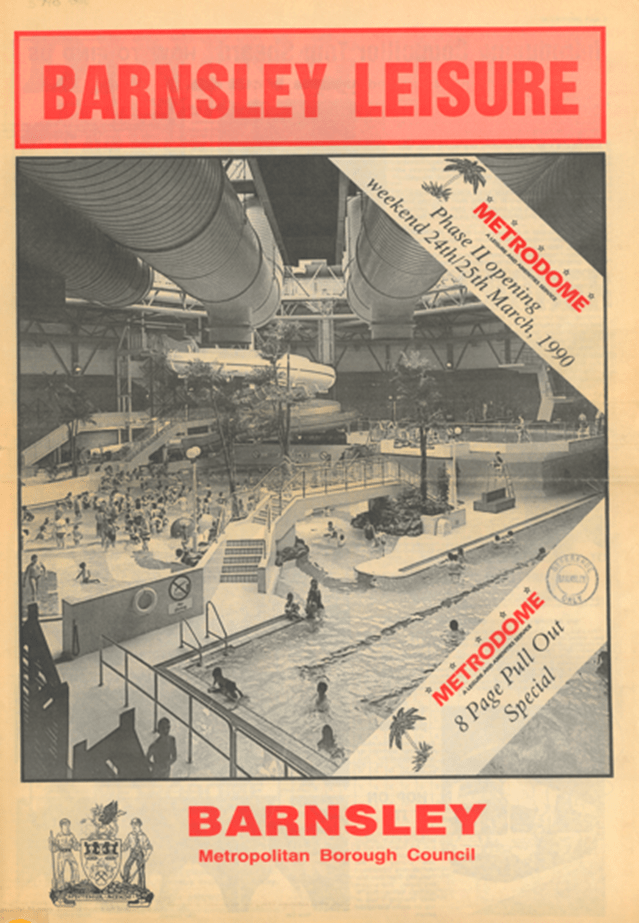
Town centre activities in Barnsley were enhanced with the opening of the Metrodome in 1989. This happened in two phases between 1989 and 1990. The first part was known as the ‘wet phase’ and opened on 1 August 1989. It included swimming and diving pools, along with water slides. The second ‘dry phase’ opened during the last weekend of March with a main arena including badminton courts, climbing room, tenpin bowling, fitness room, sauna, gym and conference rooms. Barnsley Council produced a special eight page supplement, which we have in our collections. The Metrodome was officially opened by Neil Kinnock, then leader of the Labour Party, on 3 July 1990.
Find out more about local government in Barnsley with Barnsley Archives and Local Studies. For more information visit our website which includes our opening times and how to view the above items and more. You can also keep up to date with our latest news and events on Facebook and Twitter
Have you read our recent blogs?

 Barnsley Museums Blogsite