Tailor Made in Barnsley is a celebration of textile makers in an exhibition which is on display at Experience Barnsley Museum until 16th September 2023. The borough has centuries of stories of weaving, sewing, and quilting to tell. Whether it’s a McLintock’s jacket or a Barnsley linen tea towel, our fabric products were known for innovation and top quality.
The early years
Weavers cottages, Heelis Street in Barnsley in 1950 (c) Barnsley Archives
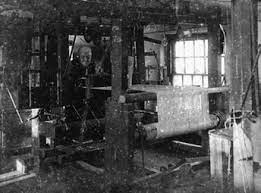
Along with glassmaking, linen weaving was one of Barnsley’s big industries in the 18th and 19th centuries, but its origins go back to the early weavers’ cottages. From these small dwellings with one loom to the later factories driving the economy, Barnsley’s linen products were respected around the world for their quality design and finish. By the late 18th century, weavers’ cottages were being built all around Barnsley town from Old Mill Lane to Racecommon Road to May Day Green. A typical cottage had two floors with living spaces and a cellar for the weaving loom. The cellars were damp which was good for the yarn but bad for the weavers’ health. Working and living conditions were poor with weavers working up to 14 hours a day. The cottages had poor ventilation with small windows at street level to allow some light in. As the industry grew, new linen mills were built and the weavers in their cottages felt their trade decline. The first mill was built by Thomas Taylor on Peel Street in the 1840s and many local entrepreneurs followed suit, creating a thriving, international industry. Barnsley became well known for the high quality of the fabrics that it produced. On Barnsley’s official coat of arms, you fill find two shuttles representing the linen trade.
Robert Darling was the last Barnsley handloom weaver in employment. He died in 1915. By the First World War, less than 800, mostly women, were still employed in the linen industry because remaining tasks needed dexterity not strength.
The factories – McLintock & Sons
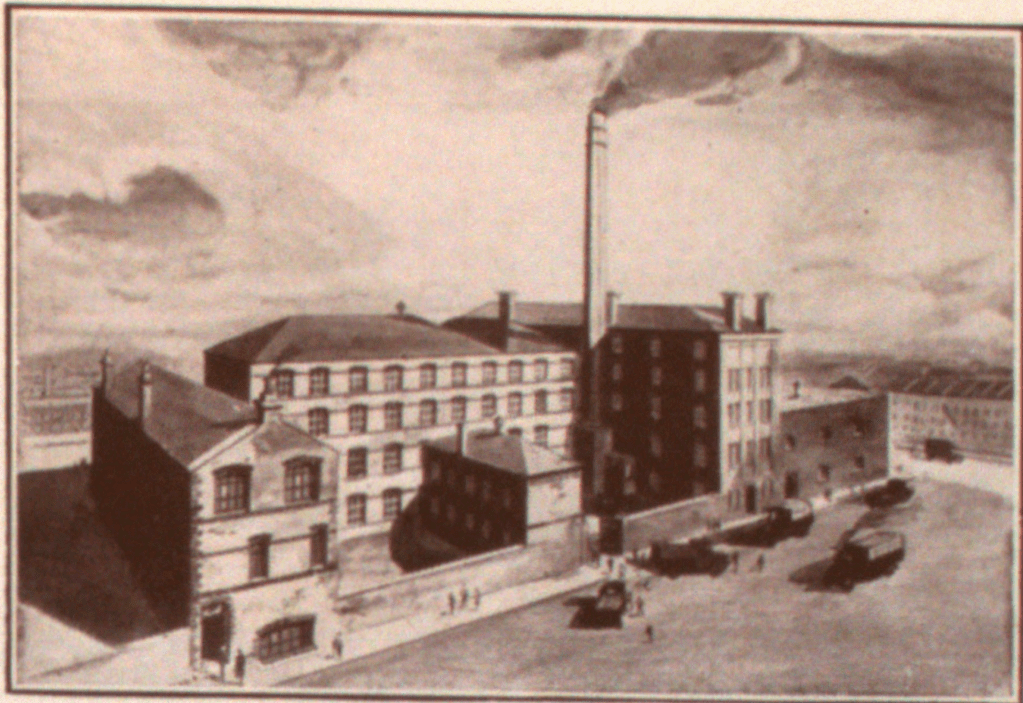
Barnsley is the home of a unique and colourful invention – the down quilt. In a factory on Summer Lane, McLintock & Sons produced award winning quilts and quilted garments and exported them around the world. James McLintock (1805–1878) was the son of a Scottish linen weaver. He began his working life in a linen warehouse in Barnsley, progressing to travelling salesman, then setting up his own firm with his two sons. James discovered that silk waste could be used to create a warm lining between two pieces of fabric. The fabric was then quilted into a pattern to keep the lining in place. The Utilitas Works opened in 1867 and produced skirts, jackets, dressing gowns and even quilted smoking caps. The bright patterns and decorative braid made McLintocks items hugely popular. McLintocks Down Quilts were probably their most successful item, using feathers from duck or geese to make light quilts which were still very warm. Quilting and sewing factories followed, employing thousands of skilled workers.
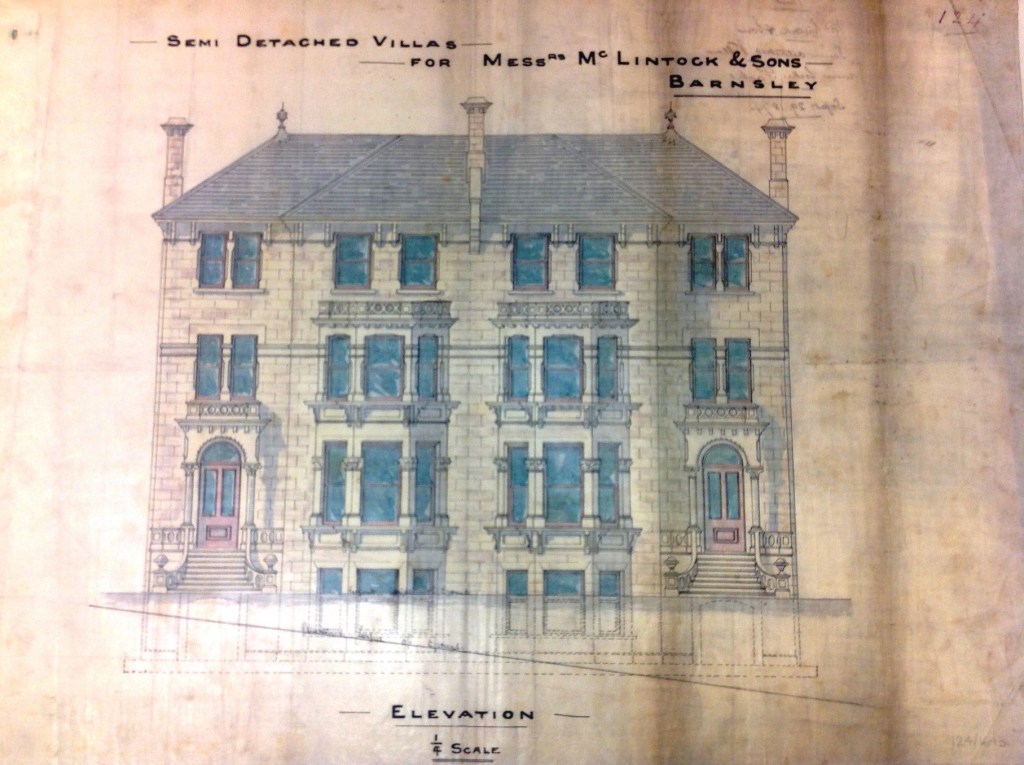
A building plan of the Mclintock’s buiding on Summer Lane, from Barnsley Archives
Wm Sugden & Sons
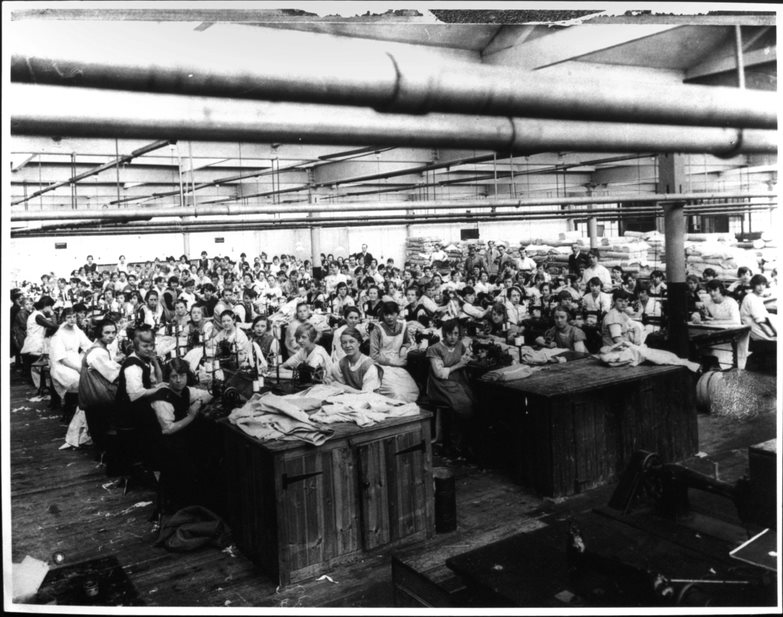
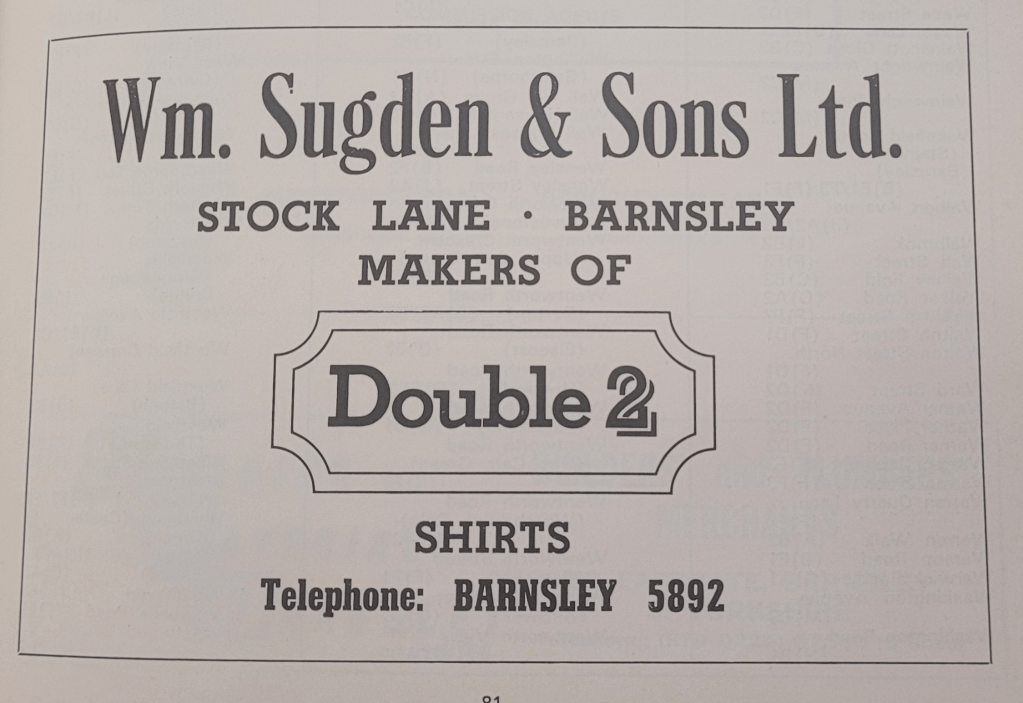
In 1904 a new factory was opened at Hope Works, Sackville Street in Barnsley. Already established in Cleckheaton in West Yorkshire, William Sugden and his two eldest sons Allan and Bernard, made Barnsley their new base in a bid to create a Yorkshire wide empire. Employing hundreds of Barnsley people, the factory was kept busy during the First World War providing clothing for those away fighting on the front line. By the time the war ended, they had produced hundreds and thousands of shirts and uniforms for the armed forces. In 1928 the factory’s welfare club presented £1000 to the local Becketts Hospital in Barnsley to endow a new hospital bed. Later the Sugden family went on to sell the firm to the Donner family, owners of another local business, Double Two.
N Corah and Sons
This company was founded by Nathaniel Corah at the Globe Inn, Silver Street, in Leicester before Nathaniel teamed up with his three sons John, Thomas and William in 1830. The name of the firm became Nathaniel Corah & Sons and soon after they opened a factory in Worsbrough Bridge, Barnsley. The firm was the first company to develop a relationship with Marks & Spencer. Known locally as “Corah’s” they supplied the government with millions of knitted items and clothing coupons.
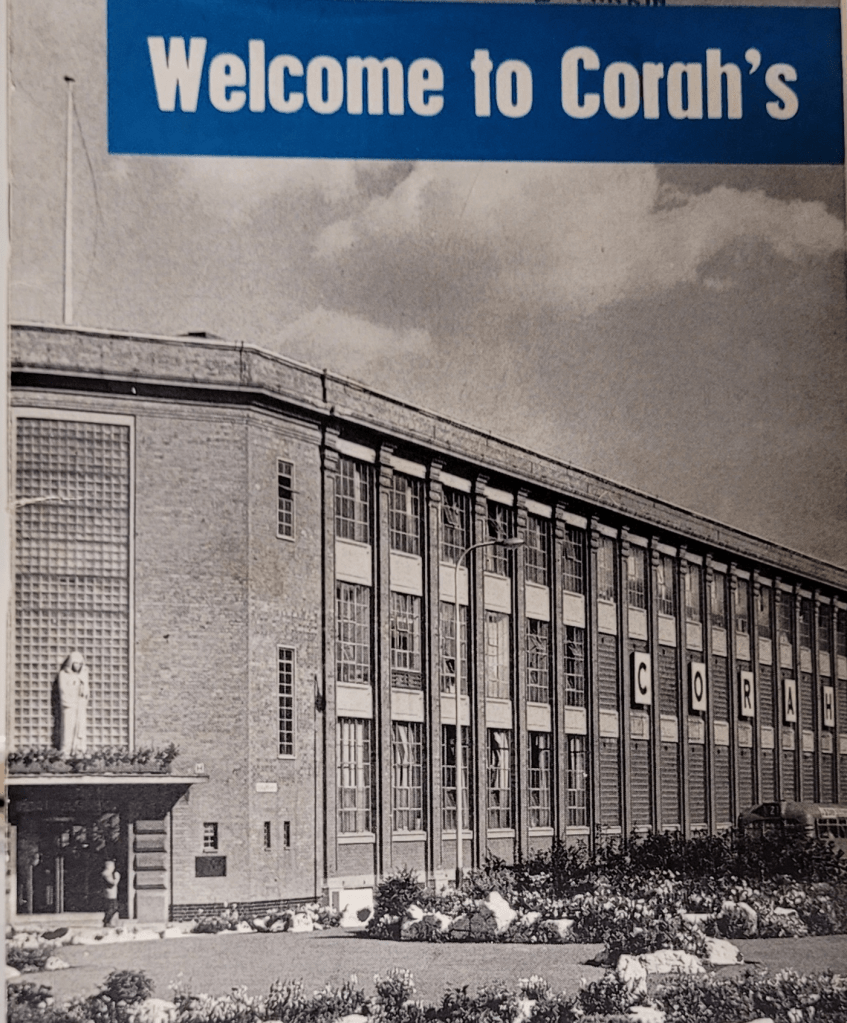
Corah’s at Worsbrough. The company employed 6000 people at it’s peak and had factories across the UK and one in Canada alongside a factory in nearby Bolton-upon-Dearne
SR Gent & Co Ltd
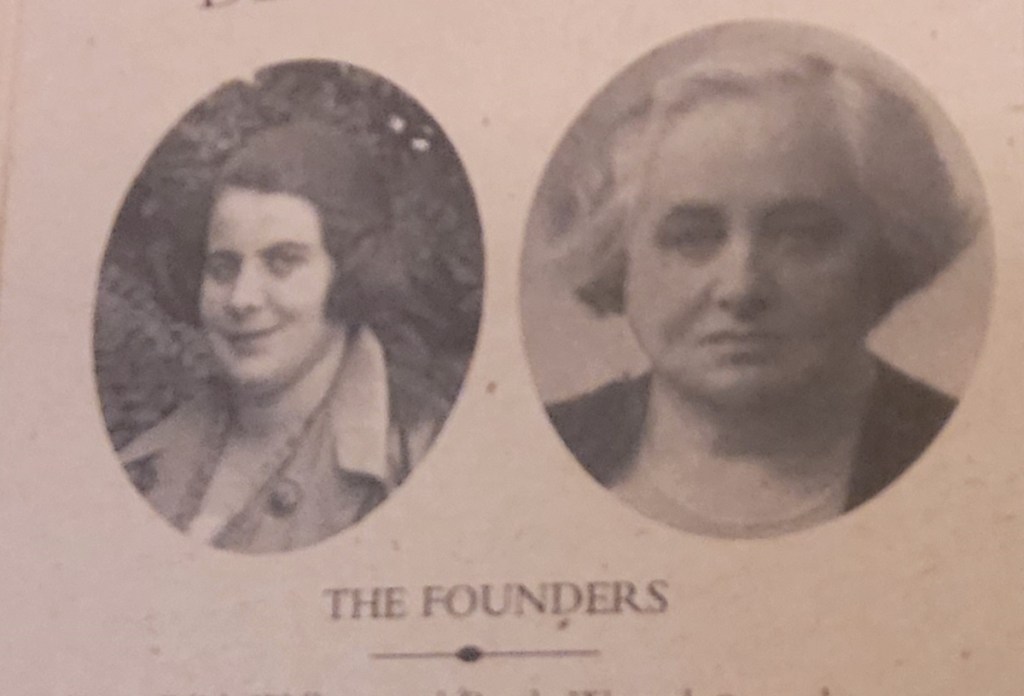
Edith Wallace and Ruth Wetzel
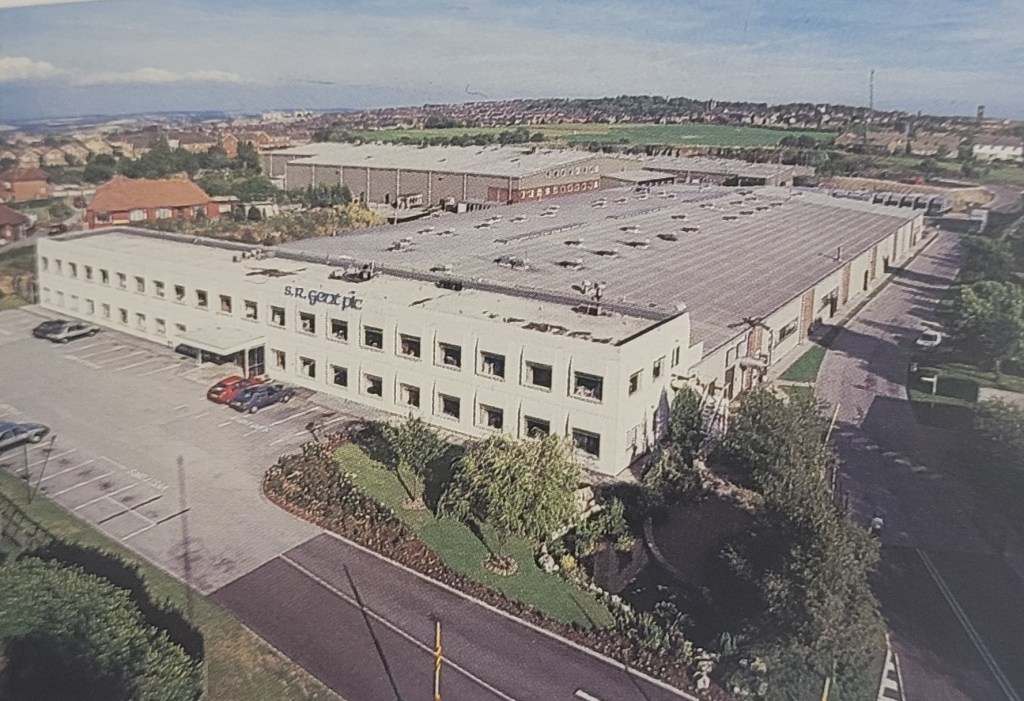
Founded by German refugee sisters Edith Wallace and Ruth Wetzel in 1945, SR Gent & Co manufactured blouses for Marks and Spencer. In the 1960s Ruth asked Peter Wolff to take over the company, working alongside her own son. Wolff had also fled Nazi Germany as a child. Based on Dodworth Road the company employed more than 4,500 people in its heyday and had a long history of suppling Marks & Spencer’s clothing lines for decades. As well as the head office in Dodworth the firm operated across the UK, mainly in the north. In Barnsley they had a fabric warehouse in Carton and a number of sewing units in and around the town centre. The company was dissolved on 30 June 2010.
Edith Wallace and Ruth Wetzel
These factories and many more employed thousands of workers. The common thread for Barnsley’s textile companies was the struggle with competition from cheaper imports in the later 20th century. Barnsley’s industry could not respond to the changing demands of the market and factories gradually closed. Part of wider de-industrialisation in Britain, the closure of these factories hit the workers, their families and the borough hard. In the exhibition at Experience Barnsley you can view objects from the museum and archive collections which show some of the people, processes and products of this rich textile history.
Do you have memories of any of the factories that we have featured? Leave us a postcard in the exhibition feedback area or get in touch via our social media channels by using the hashtag #TailorMadeBarnsley
Whilst researching the history around Elsecar, Catherine Roebuck (Visitor Services Assistant) came across a reference to a boat called the ‘North Star’ built in 1855. This was a surprise that boats were built so far from the coast, she then set about trying to find the Boat Yard. Why was there a boat yard? In…
As we look ahead to what 2026 has to offer, Gillian Thorpe from Barnsley Museums & Heritage Trust re-caps 2025 2025 was a very exciting year for Barnsley Museums and Heritage Trust as it was the year we celebrated our 10th anniversary, and an event was held at Barnsley College to celebrate this milestone. 2025…
Volunteers are amazing. They give their time, energy, and commitment to make our museums and heritage sites better for everyone. In doing this they have created a community across five distinct but connected places. They have done incredible things supporting Barnsley Museums and while we can’t cover everything, here are some highlights from 2025. Pathways…





 Barnsley Museums Blogsite