
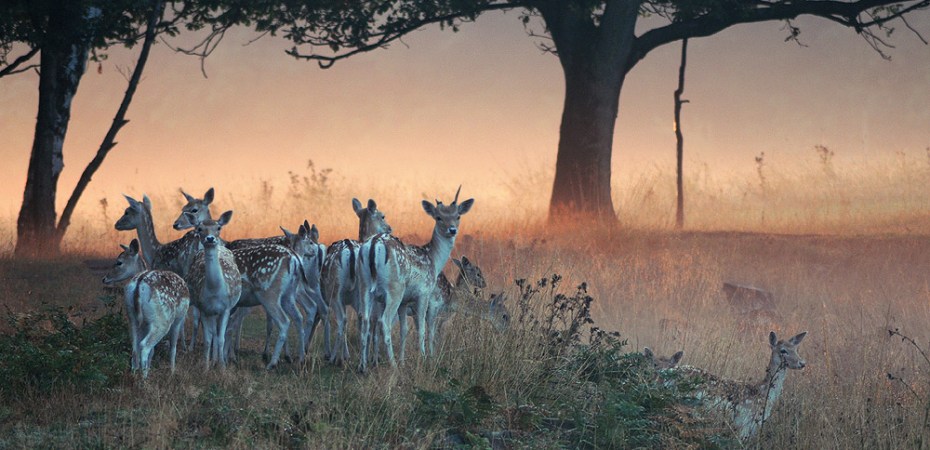
Wentworth Castle Garden’s extensive parkland creates a valuable sanctuary for nature and a home for herds of red and fallow deer. Local photographer and regular visitor @YearWithDeer has spent several years photographing the deer throughout the seasons and takes us through a year in their lives.
It is early morning before sunrise during the first week in November. Mist shrouds the park; all that can be heard is the drip of water from the oak tree under which I sit. In the branches above me crows are stirring, interrupted by the occasion scurry of squirrels as they chase each other down the trunk and across the grass. From somewhere beyond the trees ahead of me I can hear Barry, the big, mature fallow buck grunting his mating call. He is a handsome fellow, the biggest and oldest of the bucks and the undisputed dominant male.
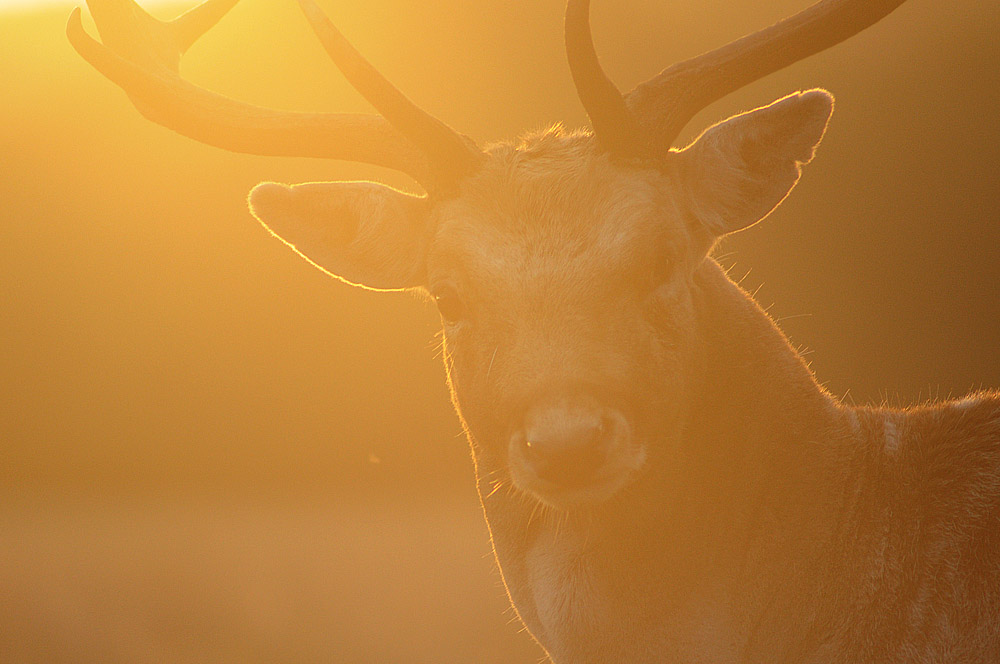
The first rays of sunlight creep across the grass, picking out drops of water as points of light, turning every clump into a glittering tiara. Light falls softly around the deer, Barry silhouetted against the pale gold of sunlight on mist. He looks at me, turns and trots towards a group of does, groaning as he jogs, plumes of steamy breath left in his wake. Younger bucks wisely move out of his way. I have my favourite spots around the park to position myself for photos. For sunrise, I know the places where I’ll get magnificent backlit shots as the sun rises over the woods, bathing the deer in beautiful early light.
The red deer rut is over. From late September and throughout October, the park rang to the bellow of Bertie, the big stag, as he chased hinds across the grass and through the woods. Fallow deer do everything a little bit later than the red deer and now they are at the height of their rutting season, which will last until late November or early December. Nature programmes focus on the rut as the highlight of their year, but there is much more to the world of deer than just these few weeks in autumn.
Deer have fascinated us from our very early days. They are featured in scenes painted by Palaeolithic hunters over 30,000 years ago. Red deer antlers have been found modified to be worn as head adornments, used either during hunting trips or in ceremonies. Many of the UK’s largest Neolithic earthworks, such as those at Stonehenge and at Avebury, were dug using red deer antlers fashioned into pick axes. They feature prominently in mythology and folklore around the world. The Celtic god Cernunnos is the protector of animals and to the Celts, they were the ‘Children of the Mist’, regarded as messengers of the gods, liminal creatures able to slip between worlds.
My focus has mainly been on the fallow deer, which are inquisitive, intelligent creatures with distinctly individual personalities. They live in hierarchical groups and form strong bonds with each other. This applies to both males and females and it is common to often find the same deer together. Their colouring ranges from white, through their common tan colour with white spots, to dark brown and black. Mature males, known as bucks, have broad palmated antlers and females usually give birth to a single fawn in the summer.
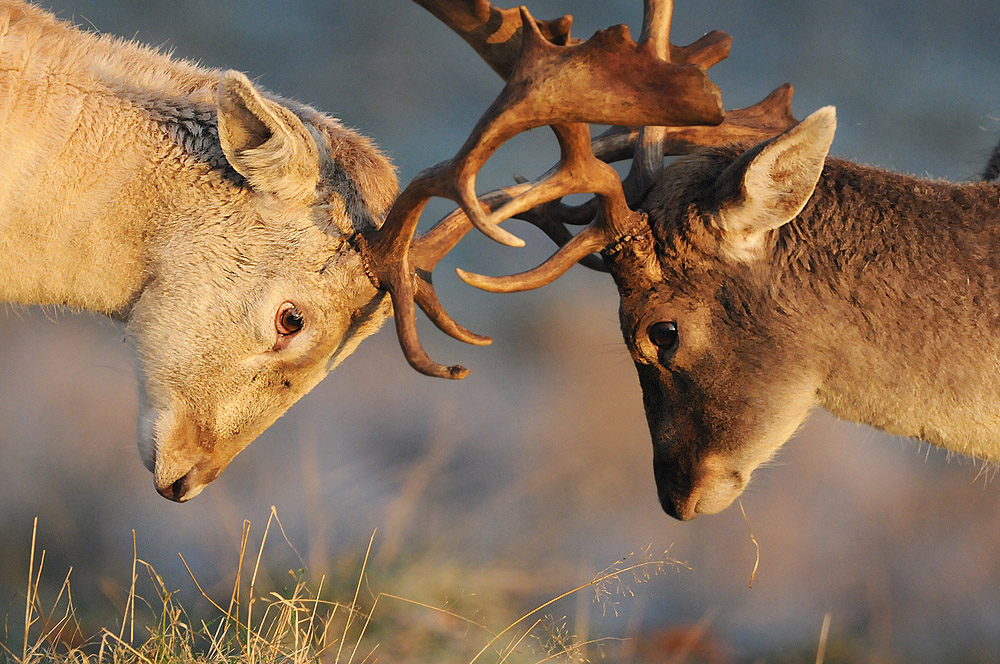
Throughout late summer and early autumn, the deer graze on falling fruit and nuts. First the fruit of the two pear trees in the park ripen around the end of August and deer gather under their branches to wait for the falling fruit. A few play tussles can develop among the younger bucks, testing their strength against each other, packing away as much food as possible and building their neck muscles for the rut that lies ahead. Next come the beech nuts and acorns, which the bigger bucks will reach by standing on their hind legs and using their antlers to knock them down out of the trees. The taller red deer stags can reach higher branches and sometimes will be accompanied by fallow deer waiting to hoover up around them. Finally the chestnuts begin to fall in October, coinciding with the start of the rut. The chestnut trees often become the focus of rutting stands, as they draw in does to graze around them.
The rut arrives as rising testosterone levels surge through the bucks, caused by dropping temperatures and shortening days. Their appearance changes as their neck muscles and winter coats thicken to make them look bigger. They will dig out wallows, urinate into the mud and roll in it, darkening the fur around their faces. This helps to spread their scent and sometimes they will urinate directly onto their antlers. The smell of a rutting buck can be quite pungent; scent plays a big part in the hierarchical world of deer and advertises their size and prowess to both potential mates and adversaries. A deer’s sense of smell is a thousand times more sensitive than that of a human and bucks will only fight when they are evenly matched, battles can be avoided just by the use of scent. Scent glands sit just below their eyes, which can often be seen weeping musk and glands under their front hooves are used for marking the ground with their scent.
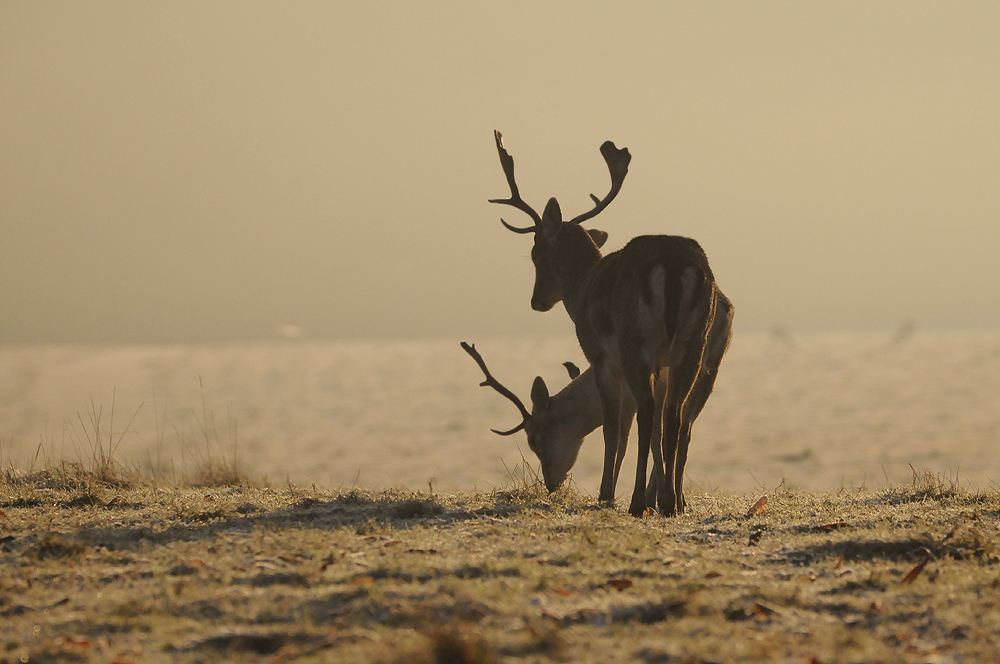
Bucks who may have eaten little over the preceding weeks now face the onset of winter. Prolonged periods of bad weather can claim casualties, but until next autumn, a welcome peace returns to the park. Winter can be a great time to photograph deer, on crisp, frosty mornings or even the gloom of a wet winter’s day, which is perfectly suited to a black and white shot.
As winter passes into spring, the mud begins to dry and grass begins to grow again. Rising temperatures and lengthening days cause the deer to moult their winter coats, leading them to look decidedly scraggy for a few weeks in April. The bucks’ testosterone levels have been falling since the peak of the rut passed, which leads them to shed their antlers in late April and early May. Red deer cast their antlers sooner, usually in early to mid April, although in southern England where temperatures are warmer, antlers can be shed as early as late February.
Deer cast and regrow their antlers yearly, which are composed of bone, not horn like sheep and goats. Antlers are attached to two protrusions on the deer’s skull called pedicles. As testosterone levels fall, the bone at the base of the antlers weakens until they eventually fall off. Irritation often leads bucks to rub their antlers against the base of trees or fences in order to knock them off. Older bucks with larger antlers will usually cast first, as they need longer to regrow. For a few days afterwards it may look as if they have bloody, open wounds on their heads, but they soon heal over as the new antler buds develop and causes the deer no pain.
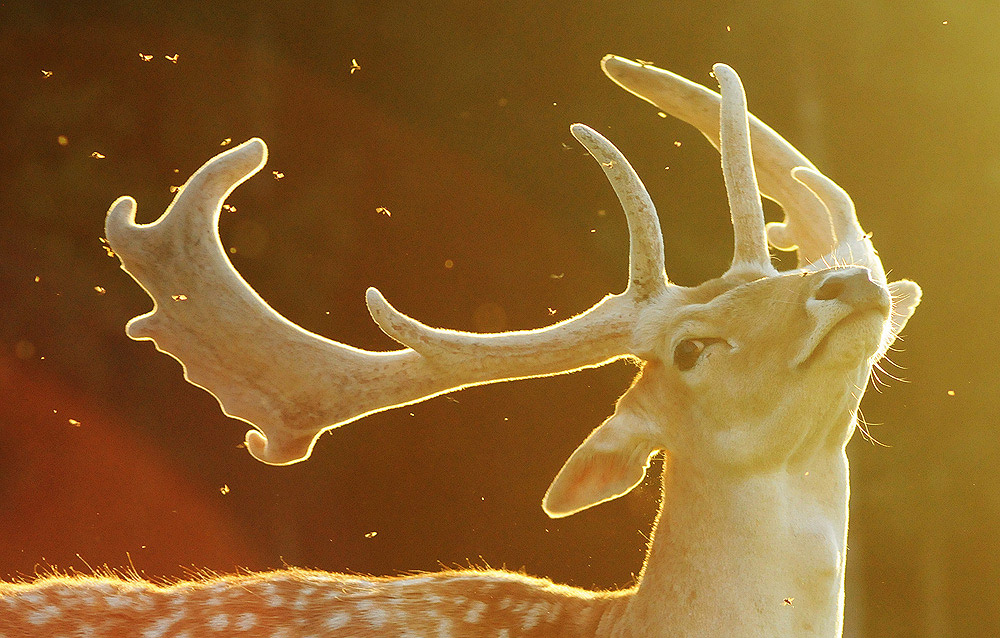
Antlers regrow over the summer, covered in a coating of velvet, which delivers blood and nutrients for bone formation. At this time of year you will often see bucks surrounded by clouds of flies, which feed on any blood that escapes through tears in the velvet. Antler bone is one of the fastest growing organic substances and can grow up to an inch a day through something that is very much like a controlled form of bone cancer growth. Deer also have cancer suppressing genes that keep the growth in check and stop it spreading1 or even combat any tumours that form, which disappear over time2, something that is currently the subject of scientific research.
Summer is my favourite time of year with the deer. The bucks are at their most sociable and live together quite peaceably. They won’t use their antlers while they regrow, as they are still soft and easily damaged. Any disputes are usually settled by a quick bout of boxing. Backlit, velvet covered antlers look great in photographs.
Fallow does begin to give birth to their fawns from the middle of June and into July, while red deer start in May. For the first few days, does will hide their fawns in long grass or nettles, while they go to feed. Sometimes they are so well hidden that it is possible to walk within a few feet without noticing them. Other times, it is common to see them in the grass very close to paths and it is important to keep dogs under control and not to disturb them. A fawn left on its own has not been abandoned, the mother will be close by, but picking up a fawn can cause the mother to reject it. The best course of action is to leave them where they are. This year I only noticed the first fawn of the year when I saw several does stood around looking at it in the rushes near the Rotunda.
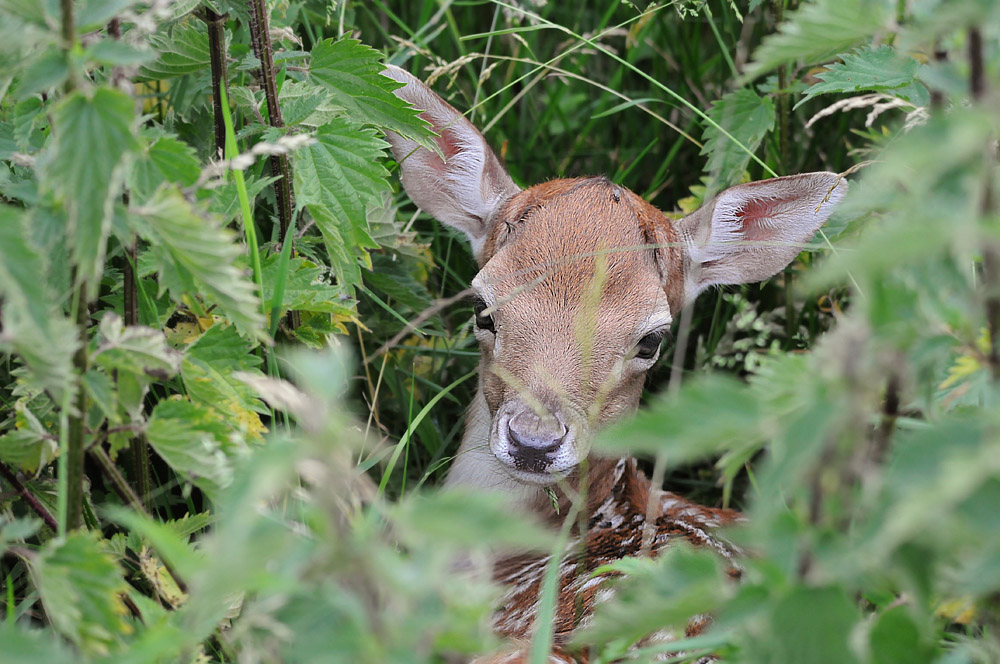
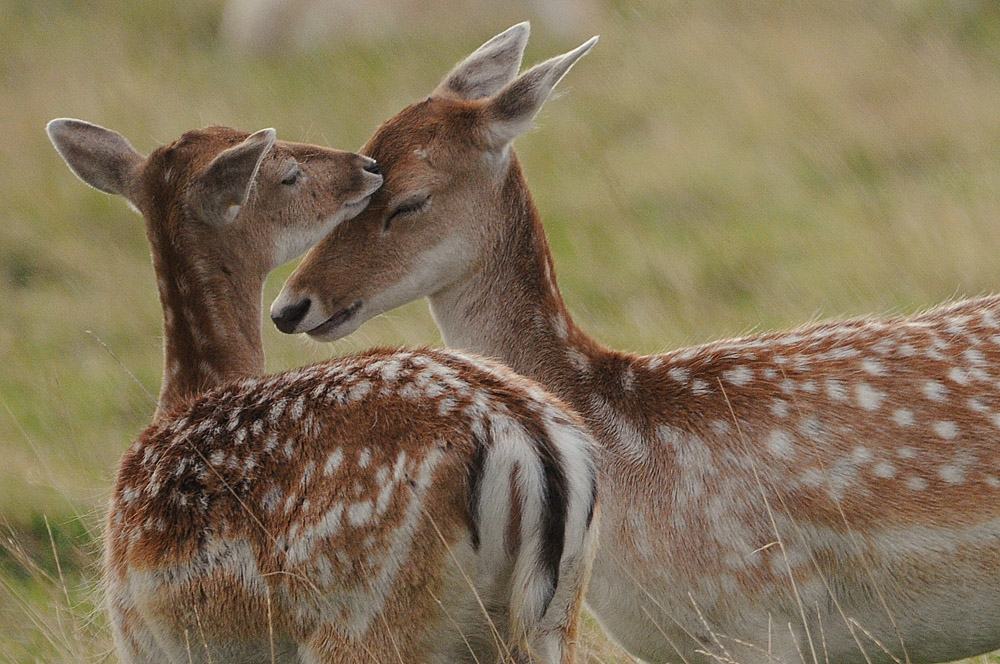
After a few days, the fawns are strong enough to keep up with their mothers. Sometimes does will form crèches to look after several fawns while their mothers feed. Prickets (juvenile males with spikes) will often share babysitting duties and can often be found playing chase games with the fawns. There is no better way to spend a summer evening than sitting under a tree watching fawns playing, chasing each other around the park, the warm air ringing with their calls. They engage in a form of movement known as ‘pronking’, a stiff-legged bounce that textbooks explain as a form of self-preservation intended to communicate fitness to a would-be predator and as a feature of play among young deer. While this is true, I’ve seen fallow deer of all ages, including fully-grown mature bucks pronking, and not just as a defence mechanism, but seemingly out of pure joy.
The bucks begin to shed the velvet from their antlers in August, starting firstly with the prickets and gradually working up to the mature males with the biggest antlers, where velvet hang in bloody ribbons. Despite its gruesome appearance, the shedding of the velvet doesn’t cause the bucks any pain. They will thrash their antlers in vegetation and against trees to rub the velvet off and once again, preparations for rutting season will begin.
Knowing the fallow deer as individuals, even friends has been one of the great pleasures and privileges of my life. I live in awe of these wonderful creatures, often gentle, funny, intelligent, even compassionate, and sometimes driven by the forces of nature to kill each other. I never grow tired of photographing their lives and trials through each year; especially Barry!
Wentworth Castle Gardens is managed and developed by a partnership of three organisations: Barnsley Museums, Northern College and the National Trust.

For many more photos, visit @YearWithDeer on Twitter
Sources
1. https://www.sciencemag.org/news/2019/06/cancer-genes-help-deer-antlers-grow






 Barnsley Museums Blogsite