In this mini series of blogs Paul Stebbing, Archives & Local Studies Officer explores highlights from the diverse Barnsley Archives collections
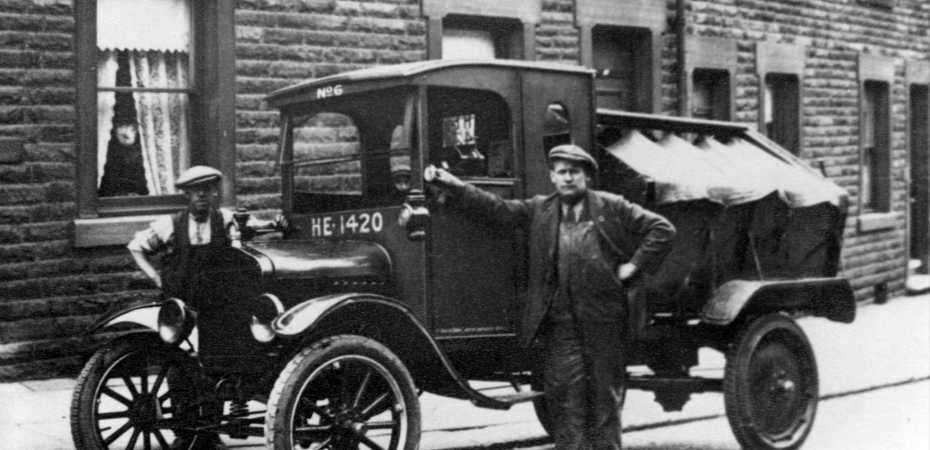
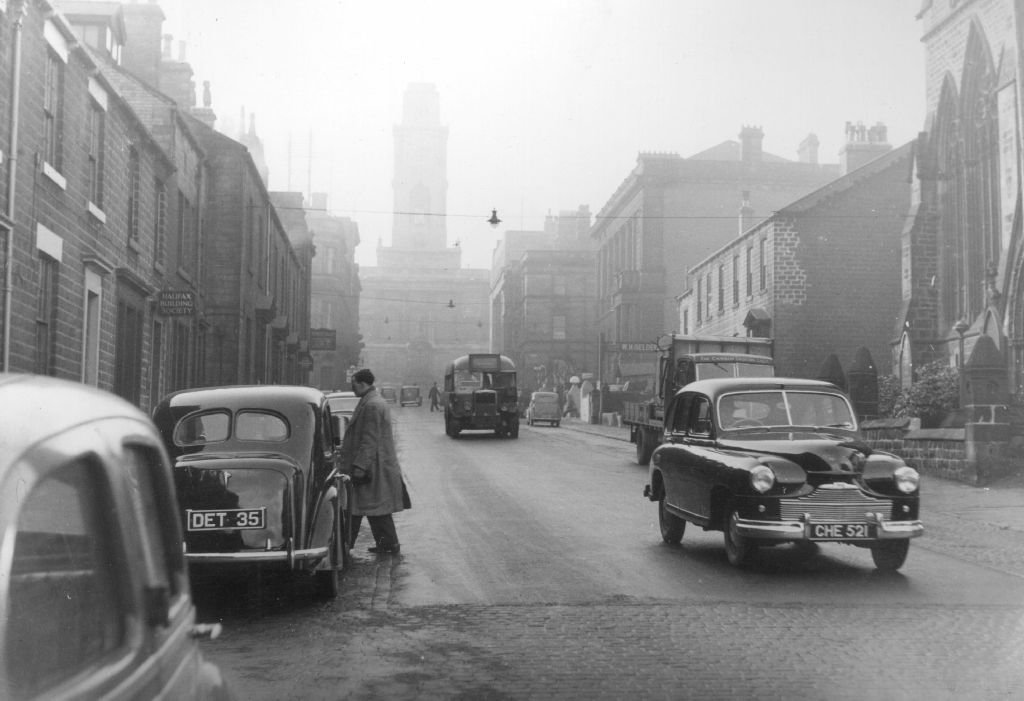
Cars and motor vehicles are a part of all our lives and it’s hard to imagine a world without them. They have had such a huge impact on society, and it’s estimated that there are approximately 600 million passenger cars worldwide. But back in the 19th century, the streets of Barnsley were car free. The arrival of the very first car in Barnsley in 1899 was such a spectacle that it drew people out into the streets, with the Barnsley Chronicle of August 26th reporting on the event and referring to the car as a ‘horseless carriage.’ The motor vehicle has gone on to change the lives of everyone – the way we live, the way we work, and the way we travel.
The Motor Car Act of 1903, which came into force in January 1904, introduced the registration of motor vehicles and motorcycles in the UK so that they could be easily traced in the event of an accident or offence. The Act required that registration marks were shown on the vehicle and the responsibility for registration lay with county and county borough councils. At that time, Barnsley was part of the West Riding taxation authority, and cars were only just starting to be mass produced.
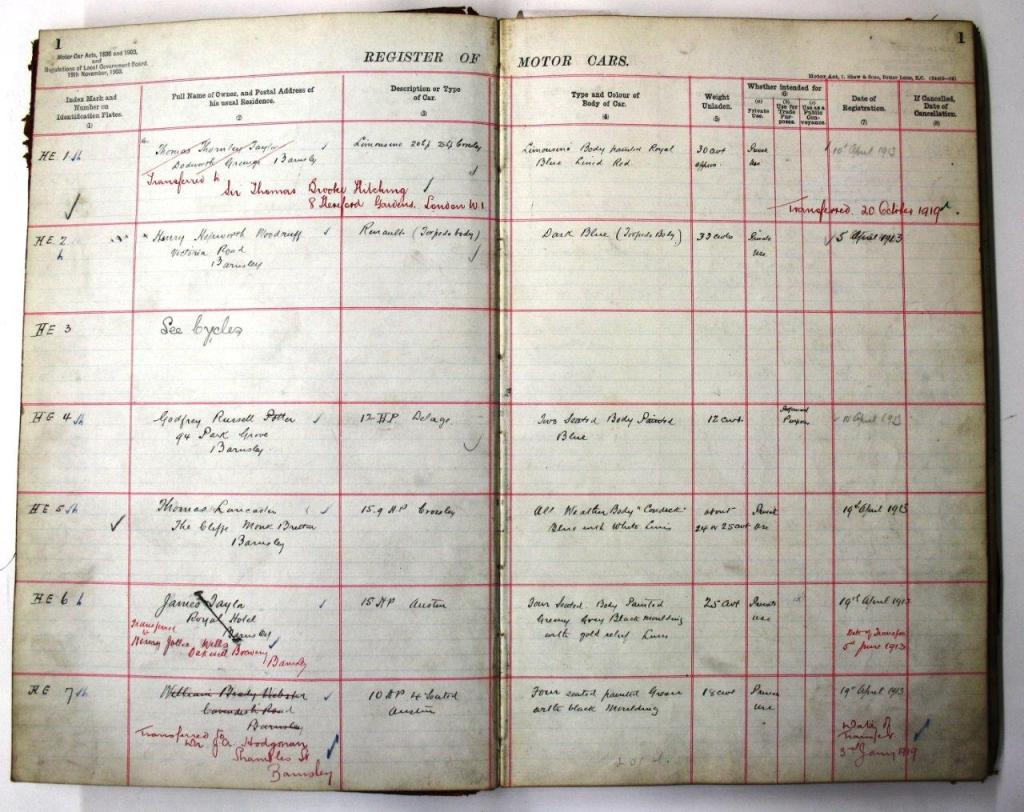
It was to be another 10 years before motor vehicles began to be registered in Barnsley itself, when, in 1913, the County Borough of Barnsley was created. The registration office was situated at the rear of Shambles Street. Thomas Thornley Taylor of Dodworth Grange is credited with being allocated HE 1 – the first registration plate issued in the new County Borough in April 1913. It was attached to his 20 horsepower Royal Blue Limousine, which had attractive red lining. Taylor was a wealthy, Barnsley-born, Church of England clergyman in his mid-seventies. He purchased the vehicle for private use and enjoyed the use of it for six years before selling it on in 1919. You can imagine him making the journey into town during the years of the First World War, when cars were still very few in number. Taylor died in 1922, aged 83.
Vehicles continued to be registered in Barnsley until 1976, when, the system was computerised and centralised at Swansea. Luckily, 15 volumes of registrations have survived, spanning that 63 year period, and they are available for public use at Barnsley Archives and Local Studies.
These records provide a fascinating insight into the owners of these vehicles. They could quite easily have been destroyed in 1976, as there was no legal requirement to preserve them, but thankfully they were sent to the South Yorkshire County Record Office in Sheffield, before being transferred back to Barnsley in 2010.
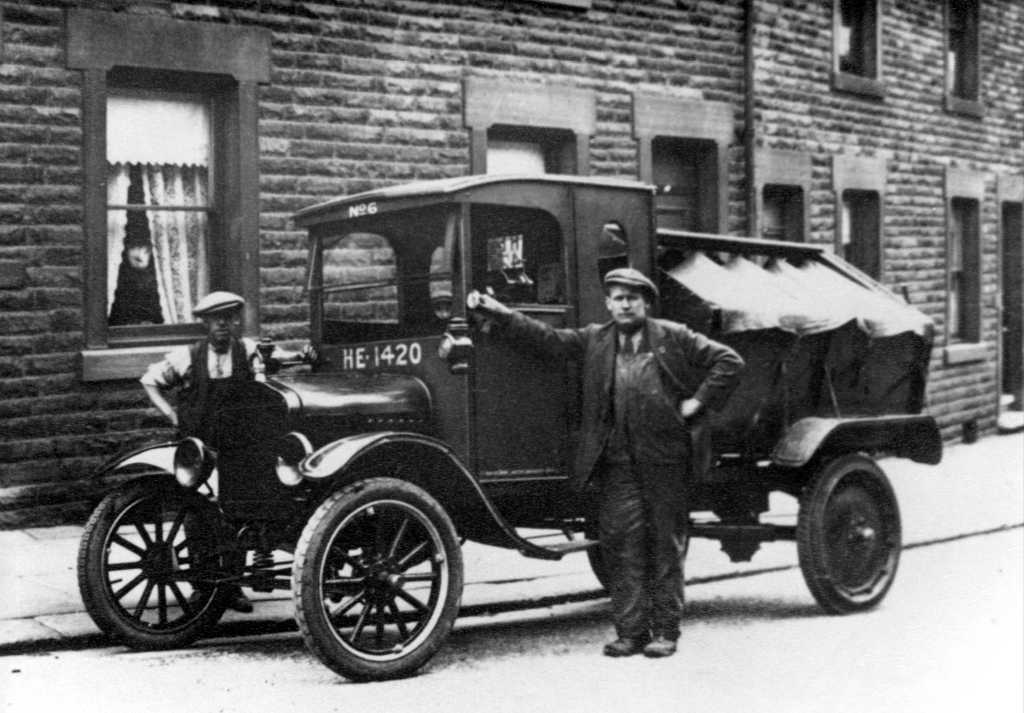
The earliest registers from 1913-1920 give the most information, at a time when motor vehicles were the privilege of the very wealthiest in society. The registers from that period give the name and address of the owner, the type of car, the colour and weight of the body, the intended use of the vehicle, the licence number and the date of registration. Owners of motor cars and motorcycles are divided into separate sections. In 1914, the first full year of registration, just 81 vehicles were registered. By 1974, the annual figure had risen to 3500! They provide a wealth of information for historians interested in the history of motoring. They are also of great interest to those tracing their family history, as they can indicate the wealth and social status of our more recent ancestors. The registers also provide a nice link to present-day Barnsley through the inclusion of the coveted THE1 plate, which can still be seen in the town on the mayor’s official vehicle.
Explore more of our collections online
Although Covid19 means The Archives Discovery Centre is currently closed and document retrieval is unavailable we are continuing to make more of our catalogues available online, simply visit http://www.explorebarnsleycollections.com
‘Gem From The Archives’ was first published in Memories of Barnsley magazine. It is being republished by Barnsley Museums by kind permission from Pen & Sword Books Limited
 Barnsley Museums Blogsite